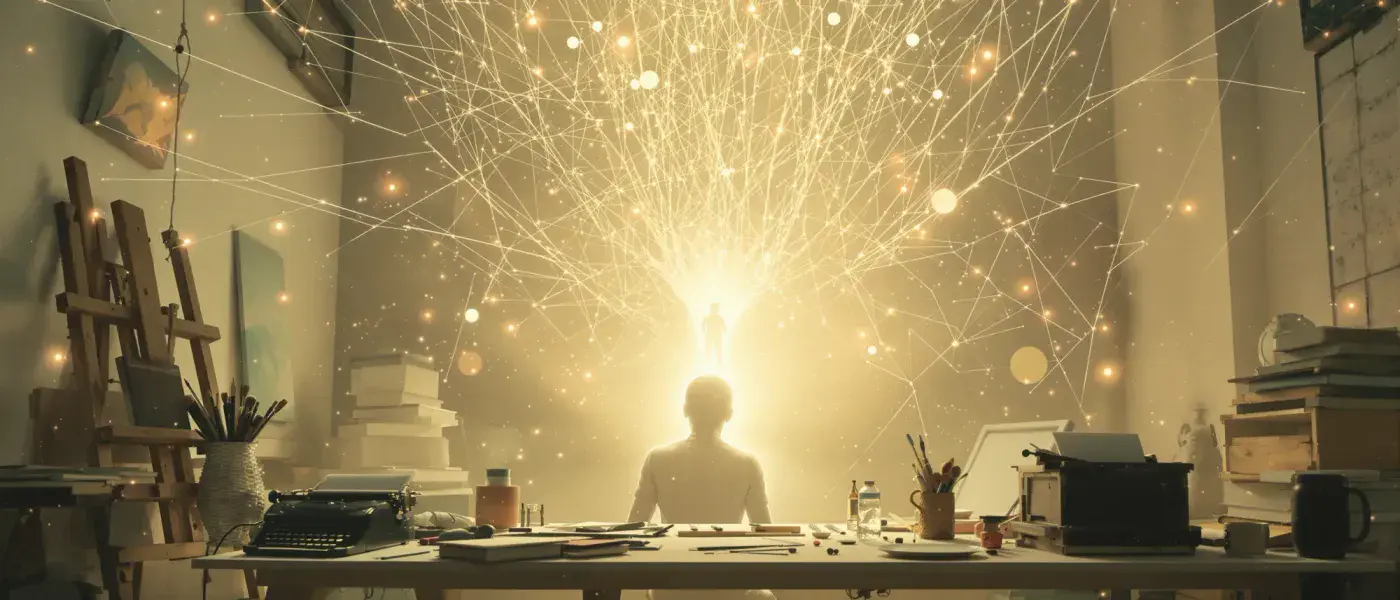
Generative AI has burst onto the creative scene like a tidal wave, stirring excitement and apprehension in equal measure. As someone who has spent my career at the intersection of technology and creativity, I see this moment as both exhilarating and daunting. On one hand, AI opens the door to unprecedented creative possibilities. On the other, it raises thorny ethical questions about how we define artistry and value in a world where machines can mimic human effort.
The debate is fierce and polarizing. Some embrace generative AI as a revolutionary tool, while others see it as a destructive force undermining the very foundation of artistic integrity. Is generative AI a tool for empowerment or exploitation? Let’s explore the tensions, opportunities, and ethical dilemmas it brings to light.
---
The Imitation Paradox: When Borrowing Becomes Theft
Art has always been a conversation with the past. Every great artist stands on the shoulders of giants, drawing inspiration from what came before. The Impressionists broke from the realism of earlier painters but were inspired by Japanese woodblock prints. Modern filmmakers routinely pay homage to classic cinema. Even Picasso famously said, “Good artists copy; great artists steal.” Steve Jobs made this quote iconic, embedding it into the cultural fabric of modern innovation.
Generative AI builds on this tradition of borrowing but accelerates it exponentially. Trained on billions of images, texts, and other creative works, it mimics styles and patterns with uncanny precision. However, unlike a human artist who transforms their influences into something uniquely personal, AI’s replication is mechanical. It doesn’t innovate—it iterates. This raises a critical question: where is the line between inspiration and theft?
For many creators, this is where ethical concerns arise. Artists who have spent years perfecting their craft feel violated when their styles are replicated without credit or compensation. Critics argue that AI systems, trained on datasets scraped from the internet, are inherently exploitative. They don’t just borrow—they appropriate, often using copyrighted material without consent.
Yet, AI’s ability to mimic also democratizes access to creative techniques. Someone without formal training can use AI to explore and experiment with styles that were once inaccessible. This opens new doors for those who lack traditional artistic skills. Is this a triumph of accessibility or a devaluation of expertise? Personally, I see this as a paradox we must grapple with carefully.
---
The Price of Originality in a Disposable World
True originality has always been a costly endeavor. It requires time, effort, and risk—none of which come with guarantees. In today’s fast-paced, content-driven world, originality often feels undervalued. Social media has amplified the demand for disposable content, prioritizing quantity over quality. However, the need for rapid, iterative creativity extends far beyond social platforms, affecting industries as diverse as marketing, entertainment, publishing, and even education.
Generative AI offers a compelling solution to these demands, not just for creating viral posts but also in broader professional applications. For example:
- In Marketing: Agencies can use AI to rapidly create ad mockups, test visual concepts, or generate personalized content at scale, catering to multiple demographics without weeks of manual effort.
- In Publishing: Editors can use AI to produce first drafts for articles, generate synopses, or even create promotional materials for books and magazines, leaving more time to focus on refining narratives.
- In Education: Teachers and educators can deploy AI to create tailored lesson plans, worksheets, or visual aids, addressing diverse learning styles without being bogged down by repetitive preparation tasks.
- In Game Development: Developers can use AI to create procedural assets, design expansive environments, or draft narrative options for games, accelerating production timelines and fostering innovation.
- In Architecture: AI tools can provide rapid prototyping of design concepts, helping architects explore variations and communicate ideas to clients more effectively.
- In Scientific Research: AI can assist researchers in visualizing data, drafting reports, or exploring hypothetical scenarios, freeing them to focus on experimentation and critical analysis.
These use cases demonstrate how generative AI has the potential to optimize workflows, empower professionals, and create room for innovation. By automating repetitive, low-stakes tasks, it allows creatives to focus their energy where it matters most—on the ideas and projects that require human insight, emotion, and originality.
---
The Cost of Progress: Who It Hurts and Why
While generative AI promises efficiency and accessibility, its adoption has ripple effects that often go unnoticed. Beneath the surface, the rise of AI can hurt certain groups in ways that deserve serious attention.
- Entry-Level Creators:
For emerging artists, writers, and designers, entry-level tasks like sketches, drafts, and initial concepts are essential stepping stones. These roles provide a space to develop skills, refine techniques, and establish a foothold in competitive industries. When AI takes over these foundational tasks, it risks narrowing opportunities for newcomers, effectively cutting off the ladder many creators rely on to grow.
- Freelancers and Gig Workers:
Freelancers are especially vulnerable. Many build their livelihoods on projects that involve lower-cost, high-volume creative work like logo designs, social media graphics, or short-form writing. With companies increasingly turning to AI for these tasks, freelancers face dwindling demand and the prospect of lower rates for what work remains. This trend risks devaluing human creativity and exacerbating financial instability in an already precarious gig economy.
- Niche Specialists:
Artists with distinctive styles and niche expertise often face a unique threat from AI. When their work is scraped to train AI models, the very uniqueness that sets them apart becomes a commodity. AI systems can reproduce their styles cheaply and at scale, undermining their market value and diminishing the recognition they deserve.
- Creative Teams in Smaller Businesses:
Small and medium enterprises (SMEs) often rely on in-house creative teams for branding, marketing, and communication. These teams may feel pressure to adopt AI to keep up with competitors but risk being overwhelmed by the complexity or costs of these tools. In some cases, businesses might downsize their teams altogether, leaning too heavily on AI while sacrificing the depth and adaptability of human input.
- Consumers of Art and Media:
Ironically, the end consumer also suffers when AI-generated content dominates. Over-reliance on AI risks flooding the market with homogenized, surface-level work that lacks the depth, emotion, and authenticity of human creativity. This shift could dilute the cultural value of art and media, leaving audiences with fewer meaningful or innovative experiences.
- Communities Defined by Culture:
Many cultural traditions and art forms are deeply tied to the communities that create them. When AI trains on these works without context or acknowledgment, it risks appropriating cultural heritage in ways that disconnect it from its origins. This not only devalues the contributions of these communities but also erases the cultural specificity that gives these works their meaning.
---
The Legal and Ethical Abyss
Generative AI doesn’t just challenge the creative process—it operates in a legal and ethical gray zone that has yet to be resolved. At the heart of the controversy is the data used to train these systems. Companies scrape billions of publicly available works from the internet, often without permission, under the shaky justification of “fair use.”
This practice raises several critical issues:
- Exploitation Without Compensation: Artists, writers, and other creators receive no financial or professional benefit from the use of their work in training datasets, even though these datasets fuel billion-dollar technologies.
- Opacity and Consent: Creators have no visibility into whether their work has been used, nor do they have the ability to opt out.
- The Myth of Fair Use: Companies argue that AI training constitutes fair use because models don’t store specific works. However, when AI can produce content that mimics a specific artist’s style with striking fidelity, this argument falls apart.
Legal challenges are beginning to emerge, with lawsuits targeting companies that train AI models using copyrighted material without consent. These battles will define the future of generative AI, but they also reveal a troubling power imbalance. Independent artists and small creators are pitted against tech giants with vast legal resources—a David-and-Goliath struggle that underscores the urgent need for systemic change.
---
Flaws in the Machine: The Limits of AI
For all its hype, generative AI is far from perfect. It is a tool, not a creator, and its flaws reveal the limits of its capabilities:
- Surface-Level Understanding: AI doesn’t understand context or meaning. It mimics styles but lacks the ability to imbue its outputs with emotion, intention, or narrative depth.
- Bias and Homogeneity: Because AI learns from existing datasets, it often reinforces stereotypes and prevailing trends rather than challenging them.
- The Feedback Loop: As more AI-generated content enters the creative ecosystem, there’s a risk of a creative echo chamber, where AI models begin to recycle and amplify their own outputs.
These limitations highlight a fundamental difference between human and machine creativity. Humans create with purpose and emotion, pushing boundaries and challenging norms. AI, on the other hand, reflects what already exists. Without thoughtful guidance, it risks stifling innovation rather than fostering it.
---
A New Role for Creators: Human and Machine in Harmony
Generative AI is neither a savior nor a destroyer. It is a mirror, reflecting the systems and values that created it. To ensure it enhances creativity rather than undermines it, we must rethink its role:
- Stronger Protections: Laws must define how AI training data can be sourced, with clear compensation models for creators whose work is used.
- Transparency and Consent: Artists should have the ability to opt in or out of training datasets and understand how their work is being used.
- Education and Empowerment: Creators need tools and training to use AI effectively, ensuring it complements rather than replaces their skills.
The potential is immense. Generative AI can free creators from repetitive tasks, spark new ideas, and expand access to creative tools. But for this potential to be realized, it must operate on a foundation of fairness, respect, and accountability.
---
A Personal Perspective
This debate is deeply personal for me. Having spent my career at the intersection of technology and creativity, I’ve seen how innovation can amplify human potential. But I’ve also seen how it can displace and disrupt, leaving people feeling disconnected from their work. Generative AI embodies both the best and worst of what technology can do. Its future depends on how we choose to shape it.
Art isn’t just about the final product—it’s about the process, the intention, and the connection it creates. AI cannot replicate these qualities, and it shouldn’t try to. Instead, it should serve as a collaborator, enabling us to focus on what makes human creativity unique. The future of art isn’t about choosing between human and machine—it’s about finding harmony between the two.
---
The Question of the Future
Generative AI represents a crossroads for creativity. It forces us to grapple with difficult questions about originality, ownership, and value in a world where machines can mimic human effort. Yet, it also offers opportunities to push the boundaries of what’s possible.
The future of creativity depends on how we respond to these challenges. By approaching AI with care, empathy, and responsibility, we can build systems that empower creators rather than undermine them. Let’s shape this future together.