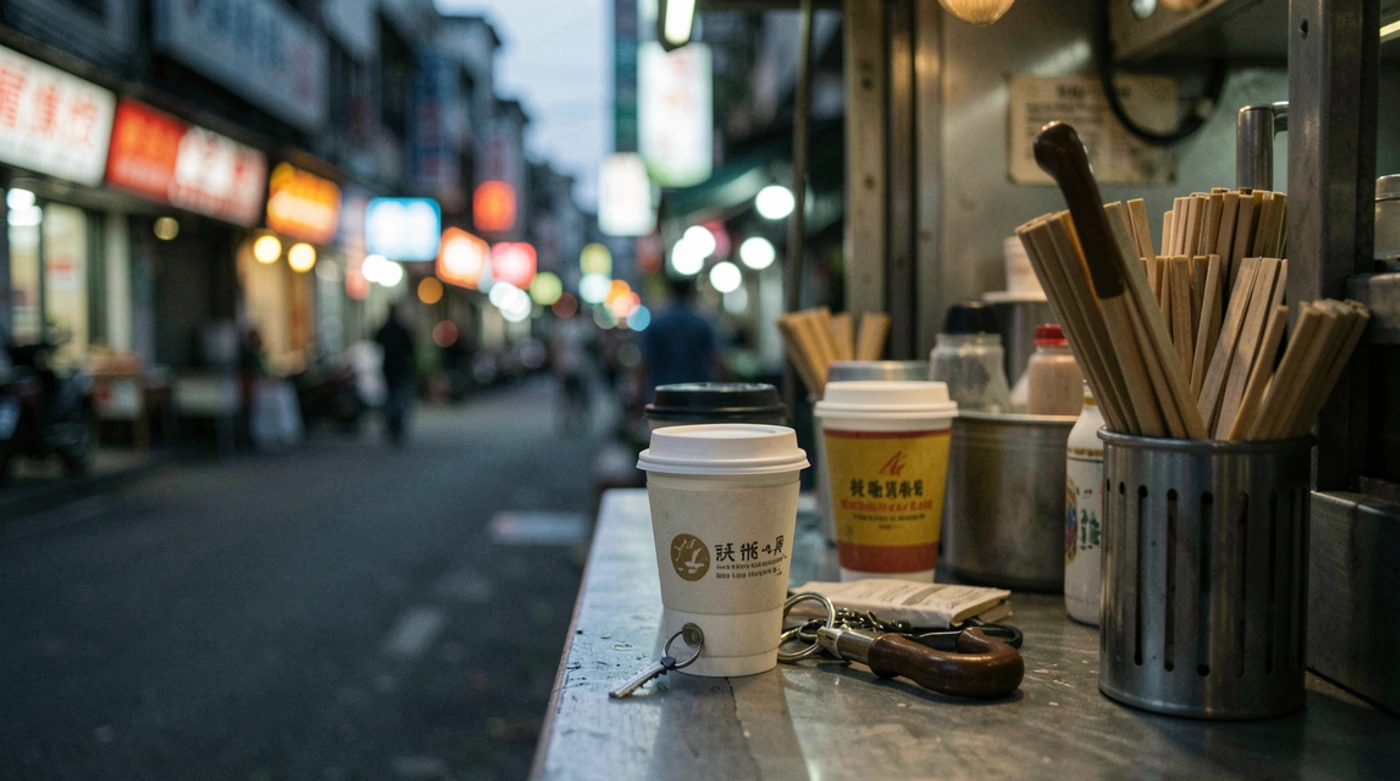
Picture this: You're standing in a bustling Taipei night market, surrounded by the intoxicating aroma of stinky tofu and the cheerful chatter of vendors calling out their specialties. Your stomach is growling, but there's just one problem—you have no idea how to order food.
I've been there. My first week in Taiwan, I survived almost entirely on convenience store onigiri because I was too intimidated to attempt ordering anything that required actual conversation. But here's what I learned: you don't need perfect grammar to connect with people. You need the right phrases, pronounced correctly, delivered with confidence.
That's where this guide comes in.
While textbooks love to teach you how to discuss philosophy and literature, real life demands something different: the ability to greet someone warmly, ask for directions without getting lost, order food that won't leave you hungry, and handle emergencies with clarity. These aren't just language lessons—they're your keys to authentic connection in the Mandarin-speaking world.
This comprehensive guide presents the most essential Mandarin expressions using Zhuyin (Bopomofo) pronunciation—the phonetic system that will give you the most accurate foundation for Taiwanese Mandarin. These aren't random phrases pulled from textbooks; they're the expressions I wish I'd mastered before my first trip to Taiwan, carefully selected from five crucial categories that cover 90% of your daily communication needs.
Why These Phrases Will Transform Your Taiwan Experience
Let me tell you about my friend Sarah, who spent three months in Taiwan speaking only English and pointing at things. She was brilliant—a software engineer who could debug complex systems—but she felt like a child every time she needed to buy groceries. Sound familiar?
Immediate Practical Value: These phrases address the real situations you'll face from the moment you step off the plane. I'm talking about ordering that perfect bowl of beef noodle soup, finding the bathroom when you really need it, and getting help when you're genuinely lost in Taipei's labyrinthine streets.
Accurate Pronunciation: Here's something most language courses won't tell you—Zhuyin symbols represent Mandarin sounds more precisely than any romanization system. While pinyin might get you close, Zhuyin gets you right. This matters more than you think when the difference between "ma" and "má" could mean the difference between calling someone "mother" or "horse."
Cultural Context: Each phrase comes with the cultural intelligence you need to use it appropriately. Knowing what to say is only half the battle—knowing when and how to say it is what separates tourists from travelers.
Taiwanese Authenticity: If you're planning to visit or study in Taiwan, these phrases reflect the natural expressions you'll hear in night markets, MRT stations, and family gatherings. This isn't textbook Mandarin—it's the real thing.
How to Use This Guide
The interactive guide below organizes essential phrases into five practical categories:
- Greetings & Politeness (8 phrases): Basic social interactions and courtesy expressions
- Essential Questions (8 phrases): Information-gathering phrases for navigation and communication
- Food & Dining (8 phrases): Restaurant ordering, dietary needs, and food-related expressions
- Transportation (8 phrases): Getting around, asking for directions, and travel-related terms
- Emergency Situations (8 phrases): Safety, health, and urgent assistance phrases
Each phrase displays:
- Chinese characters in traditional script (used in Taiwan)
- Zhuyin pronunciation with accurate tone marks
- Pinyin reference for those familiar with romanization
- English translation with context
- Usage notes explaining when and how to use the phrase
- Cultural insights to help you communicate more naturally
Essential Everyday Phrases
[Interactive Zhuyin phrasebook covering everyday greetings, questions, food, transport, and emergency phrases.]
Taiwan-Specific Dialogue Examples: Real Conversations You'll Have
Night Market Interactions
Ordering at a Stinky Tofu Stand:
Vendor: 你好!要什麼? (Hello! What would you like?)
You: 你好,這個多少錢? (Hello, how much is this?)
Vendor: 五十塊。(Fifty NT dollars.)
You: 我要這個,不要辣。(I want this, not spicy.)
Vendor: 好的!(Okay!)
[After eating]
You: 好吃!謝謝!(Delicious! Thank you!)
At a Bubble Tea Shop:
Staff: 歡迎光臨!(Welcome!)
You: 你好,有菜單嗎?(Hello, do you have a menu?)
Staff: 有,在這裡。(Yes, here it is.)
You: 我要珍珠奶茶,謝謝。(I want pearl milk tea, thank you.)
Staff: 內用還是外帶?(For here or to go?)
You: 外帶,謝謝。(To go, thank you.)
MRT and Transportation Scenarios
Taking the MRT:
You: 不好意思,捷運站在哪裡?(Excuse me, where is the MRT station?)
Local: 直走,然後右轉。(Go straight, then turn right.)
You: 謝謝!(Thank you!)
Local: 不客氣。(You're welcome.)
In a Taxi:
Driver: 去哪裡?(Where are you going?)
You: 台北車站,謝謝。(Taipei Main Station, thank you.)
Driver: 好的。(Okay.)
[Upon arrival]
You: 多少錢?(How much?)
Driver: 一百二十塊。(120 NT dollars.)
You: 謝謝!(Thank you!)
Convenience Store Conversations
At 7-Eleven:
Staff: 歡迎光臨!(Welcome!)
You: 你好,廁所在哪裡?(Hello, where is the bathroom?)
Staff: 在後面,左邊。(In the back, on the left.)
You: 謝謝!(Thank you!)
[Later, buying something]
You: 我要這個。(I want this.)
Staff: 好的,三十五塊。(Okay, 35 NT dollars.)
Temple and Cultural Site Visits
At a Temple:
Local: 你是觀光客嗎?(Are you a tourist?)
You: 是的,我是美國人。(Yes, I'm American.)
Local: 歡迎來台灣!(Welcome to Taiwan!)
You: 謝謝!台灣很美。(Thank you! Taiwan is beautiful.)
Local: 你會說中文!(You can speak Chinese!)
You: 一點點。(A little bit.)
Your Strategic Learning Path: From Survival to Connection
Here's the approach that worked for me and dozens of students I've guided through this journey:
1. Start with Greetings—Your Social Foundation
Master the politeness expressions first because every single interaction begins here. I learned this the hard way when I spent my first month in Taiwan saying "你好" with the wrong tone and wondering why people looked confused. Practice the tone patterns carefully—incorrect tones don't just sound wrong, they can completely change your meaning.
Taiwan-Specific Practice:
- Practice greetings with 7-Eleven staff (they're always friendly!)
- Use "早安" at breakfast shops before 10 AM
- Try "不好意思" when asking for directions—it's softer than "對不起"
Pro tip: Practice these in front of a mirror until they feel natural. Your face should match your tone.
2. Questions Are Your Lifelines
The question phrases are your communication superpowers. When I finally memorized "這個多少錢?" (How much is this?), my world opened up. Suddenly I could shop at traditional markets, negotiate prices, and feel like a real person instead of a confused tourist pointing at things.
Taiwan-Specific Practice:
- Use "廁所在哪裡?" in department stores, MRT stations, and restaurants
- Practice "怎麼走?" with different destinations: 夜市 (night market), 捷運站 (MRT station), 便利商店 (convenience store)
- Master "有沒有?" for checking if stores have what you need
3. Food Phrases—Your Gateway to Culture
Food culture isn't just central to Chinese society—it's the heart of it. These phrases will transform you from someone who eats alone at McDonald's to someone who can order the house special, compliment the chef, and maybe even get invited to share a table with locals.
Taiwan-Specific Practice:
- Start with night market vendors—they're patient and encouraging
- Learn to say "我吃素" if vegetarian (Taiwan has amazing Buddhist vegetarian food)
- Practice "外帶" vs "內用" at bubble tea shops and breakfast places
- Use "好吃" liberally—vendors love the compliment!
I still remember the first time I successfully ordered xiaolongbao and the vendor's face lit up when I said "好吃!" (Delicious!). That moment of connection was worth months of study.
4. Transportation—Your Freedom to Explore
Getting around efficiently isn't just about reaching destinations—it's about independence. Practice these phrases with different locations until you can confidently tell any taxi driver exactly where you want to go.
Taiwan-Specific Practice:
- Learn key destinations: 台北車站 (Taipei Main Station), 桃園機場 (Taoyuan Airport), 西門町 (Ximending)
- Practice with taxi drivers—they're usually chatty and helpful
- Use "停車" when you see your destination approaching
- Master "捷運站" pronunciation—it's uniquely Taiwanese
5. Emergency Phrases—Your Safety Net
While hopefully never needed, these phrases could be crucial when it matters most. The clear pronunciation that Zhuyin provides is especially important here—in an emergency, there's no room for miscommunication.
Taiwan-Specific Practice:
- Know that Taiwan's emergency number is 119 for fire/ambulance, 110 for police
- Practice "我需要幫助" in a calm, clear voice
- Learn key locations: 醫院 (hospital), 警察局 (police station), 藥局 (pharmacy)
Pronunciation Tips for Everyday Use
Tone Accuracy Matters
In everyday conversation, correct tones are crucial for being understood. Pay special attention to:
- Third tone (ˇ): Often changes to second tone before another third tone
- Neutral tone (˙): Common in everyday speech, especially with particles like 嗎 and 的
- Tone sandhi: Natural tone changes that occur in connected speech
Natural Rhythm
Mandarin has a natural rhythm different from English. Practice phrases as complete units rather than word-by-word to develop natural flow.
Regional Variations
These phrases reflect standard Taiwanese Mandarin. While understood throughout the Mandarin-speaking world, some expressions may vary in mainland China or other regions.
Cultural Context for Effective Communication
Politeness Levels
Chinese culture values appropriate politeness levels. Use:
- 請 (qǐng) to make requests more polite
- 謝謝 (xiè xiè) frequently—it's never overused
- 不好意思 (bù hǎo yì sī) for mild apologies or interruptions
Non-Verbal Communication
Combine these phrases with appropriate:
- Bowing slightly when greeting or thanking
- Pointing with open hand rather than index finger
- Receiving business cards with both hands
Situational Awareness
Consider context when choosing phrases:
- Formal situations: Use complete phrases and proper titles
- Casual interactions: Shorter versions are acceptable
- Emergency situations: Clear, simple phrases are most effective
Building on These Foundations
Once comfortable with these essential phrases:
- Expand vocabulary: Learn variations and synonyms for each category
- Practice combinations: Connect phrases to form longer conversations
- Study grammar patterns: Understand the structure behind the phrases
- Engage with media: Watch Taiwanese dramas or news to hear phrases in context
- Find conversation partners: Practice with native speakers or language exchange partners
Taiwan-Specific Practice Scenarios
Night Market Mastery
Essential Night Market Phrases:
- "這個怎麼賣?" (How much for this?) - More natural than "多少錢?" at markets
- "可以試吃嗎?" (Can I try a sample?) - Common at fruit stalls
- "打包" (Pack it up) - Alternative to "外帶" for takeaway
- "老闆,算便宜一點!" (Boss, give me a discount!) - For haggling
Practice Routine:
- Start at Shilin Night Market or Raohe Night Market
- Practice ordering three different foods using "我要這個"
- Compliment vendors with "好吃" - they love it!
- Ask for directions to the bathroom: "廁所在哪裡?"
MRT and Public Transport Excellence
Taiwan-Specific Transport Vocabulary:
- "悠遊卡" (EasyCard) - Taiwan's transit card
- "月台" (Platform) - For train/MRT platforms
- "出口" (Exit) - Essential for navigation
- "轉乘" (Transfer) - When changing lines
Practice Routine:
- Buy an EasyCard: "我要買悠遊卡"
- Ask for directions: "請問,西門站怎麼走?"
- Confirm your destination: "這班車去台北車站嗎?"
- Thank fellow passengers: "謝謝"
Convenience Store Confidence
7-Eleven and FamilyMart Essentials:
- "發票不用" (No receipt needed) - Environmental consideration
- "袋子要嗎?" (Do you need a bag?) - They'll ask this
- "微波" (Microwave) - For heating food
- "廁所密碼是多少?" (What's the bathroom code?)
Practice Routine:
- Buy something small and practice "我要這個"
- Decline the bag: "袋子不用,謝謝"
- Ask to heat food: "可以微波嗎?"
- Use polite greetings with staff
Temple and Cultural Site Etiquette
Respectful Cultural Phrases:
- "可以拍照嗎?" (Can I take photos?) - Always ask first
- "這是什麼意思?" (What does this mean?) - For cultural learning
- "很漂亮" (Very beautiful) - Complimenting architecture
- "謝謝指導" (Thank you for teaching me) - Showing respect
Practice Routine:
- Visit Longshan Temple or local temples
- Ask locals about traditions: "這個習俗是什麼?"
- Show appreciation: "台灣文化很有趣"
- Practice bowing slightly when thanking
Enhanced Real-World Application Tips
Restaurant Success
Advanced Ordering Strategies:
- Point to menu items while saying "我要這個" (I want this)
- Specify preferences: "不要辣,謝謝" (No spicy, thank you)
- Ask for recommendations: "你推薦什麼?" (What do you recommend?)
- Show appreciation: "好吃!" (Delicious!)
- Request the bill: "買單,謝謝" (Check please, thank you)
Taiwan Food Culture Tips:
- Many restaurants provide free tea - just say "謝謝"
- Tipping is not expected in Taiwan
- Sharing dishes is common - learn "我們一起吃" (Let's eat together)
Transportation Confidence
Navigation Mastery:
- Have destination written in Chinese characters
- Use "去哪裡?" (Where to?) to confirm with drivers
- Know key landmarks: 台北車站 (Taipei Main Station), 101大樓 (Taipei 101), 夜市 (night market)
- Learn district names: 信義區 (Xinyi), 大安區 (Da'an), 中山區 (Zhongshan)
Taxi Etiquette in Taiwan:
- Most taxis are metered - no need to negotiate
- Drivers often don't speak English, so have addresses ready
- It's polite to sit in the back seat
- Round up the fare as a small tip (optional)
Emergency Preparedness
Critical Safety Information:
- Taiwan emergency numbers: 119 (fire/ambulance), 110 (police)
- Speak clearly and slowly
- Use simple, direct phrases
- Have important addresses written in Chinese
- Know your hotel name in Chinese characters
Medical Emergencies:
- "我需要看醫生" (I need to see a doctor)
- "我有保險" (I have insurance)
- "請叫救護車" (Please call an ambulance)
- "我不舒服" (I don't feel well)
Beyond Survival: The Moment Everything Changes
Here's what nobody tells you about learning these phrases: the magic isn't in perfect pronunciation—it's in the courage to use them.
I'll never forget the evening I finally worked up the nerve to compliment a street vendor on her beef noodle soup. My pronunciation was probably terrible, but when I said "好吃!" (Delicious!), her entire face transformed. She beamed, called over her husband to meet the foreigner who appreciated their food, and insisted on teaching me the "correct" way to eat their noodles.
That's the moment language learning becomes cultural connection.
These everyday phrases are your foundation for deeper engagement with Taiwan's incredible culture. As you become comfortable with basic communication, you'll discover opportunities to:
- Build genuine relationships through consistent politeness and cultural awareness—not just transactional exchanges
- Show respect for local customs in ways that locals notice and appreciate
- Navigate social situations with the confidence that comes from knowing you can communicate your needs
- Express authentic interest in Chinese culture and language, opening doors you never knew existed
The truth about language learning: It's not a destination you reach—it's a journey that transforms how you see the world. These essential phrases will serve you well from your nervous first interaction through years of deepening cultural understanding. The key isn't perfection; it's consistent practice and the willingness to engage with native speakers who will always appreciate your effort to meet them in their language.
Start small, but start today. Choose three phrases that resonate with your immediate needs. Practice them using the Zhuyin guides until they feel natural in your mouth. Then—and this is the crucial part—use them in real situations. Yes, you'll make mistakes. Yes, you might feel awkward. But you'll also experience the profound joy of human connection across language barriers.
That's when you'll understand why learning Mandarin is about so much more than just words—it's about opening your heart to an entirely new way of experiencing the world.