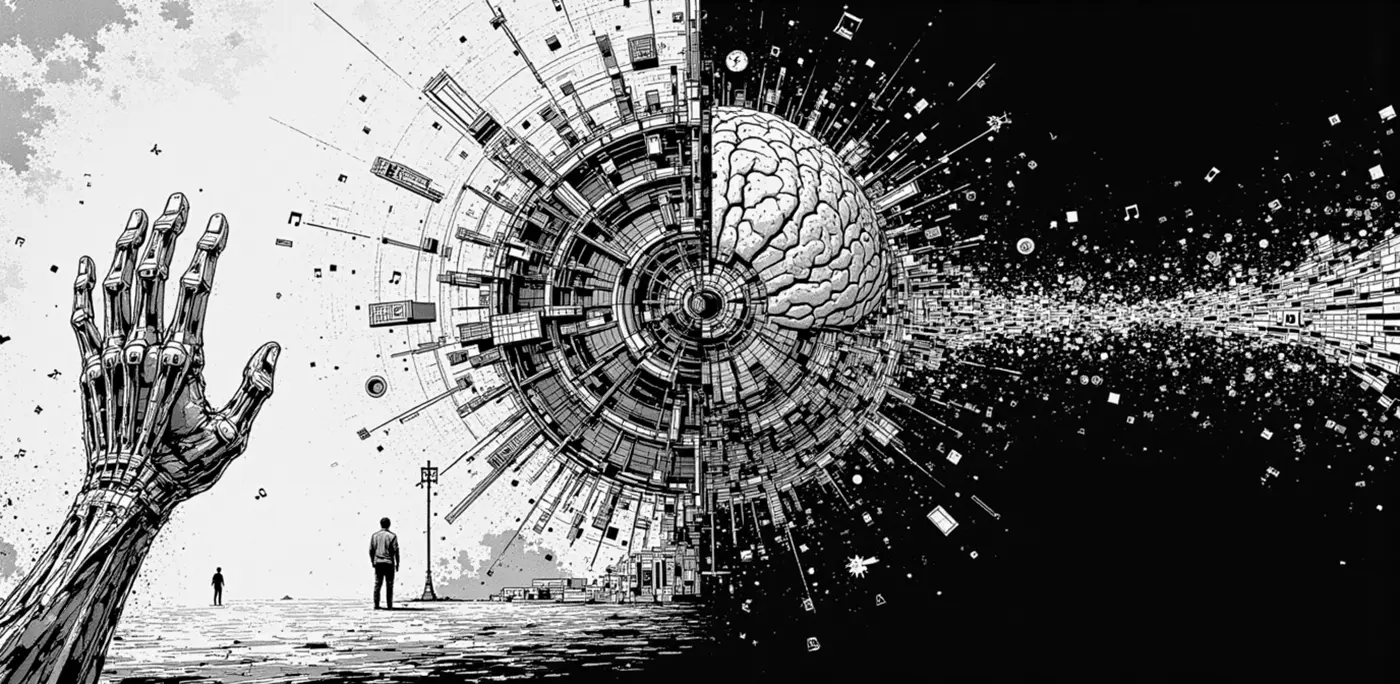
The Counterintuitive Dance of Speed: Why "Practice Slow to Play Fast" Is Only Half the Story
It was during a particularly frustrating practice session with some Neo-Classical guitar riffs that I first began questioning everything I thought I knew about musical practice. For weeks, I had been following the conventional wisdom: slow down, use the metronome, gradually increase the tempo. Yet something wasn't clicking. The piece remained stilted, mechanical—technically correct but artistically lifeless.
Then my mentor suggested something that seemed to contradict years of instruction: "Stop trying to control every note. Let your hands remember."
What followed was a revelation that would transform not just how I practiced, but how I understood the very nature of learning itself. That day, I discovered firsthand what neuroscientists have been uncovering about the dual learning systems in our brains—and how traditional practice methods often fail to account for this duality.
The wisdom passed down through generations of musicians—"practice slow to play fast"—contains profound truth, but it's only half the story.
The Tale of Two Systems: Fast Intuition vs. Deliberate Thought
Imagine a pianist performing Chopin's "Minute Waltz." Her fingers dance across the keys at breathtaking speed, navigating complex patterns with apparent effortlessness. Is she consciously thinking about each individual note? Certainly not—there simply isn't time. Yet the notes flow with both precision and expression.
This illustrates the interplay between what psychologists and neuroscientists refer to as System 1 and System 2 thinking—terms popularized by Nobel laureate Daniel Kahneman in his groundbreaking work "Thinking, Fast and Slow."
System 1 operates automatically, quickly, with little effort and no sense of voluntary control. It's our intuitive, fast-responding system that makes snap judgments and executes well-learned skills without conscious attention.
System 2 allocates attention to effortful mental activities that demand it. It's deliberate, analytical, and methodical—but also slow and resource-intensive.
Understanding how these systems interact is crucial for mastering any complex skill, whether it's playing a musical instrument, performing surgery, or executing a tennis serve.
The Paradox of Musical Practice
Let me introduce you to a fictional scenario that illustrates this dynamic. Imagine a violinist named Elena who's preparing for an important recital. She practices a difficult passage from Paganini's Caprice No. 24 by breaking it down into small segments, playing each at half tempo with meticulous attention to finger placement, bowing, and intonation. This is System 2 at work—deliberate, analytical, cautious.
The day before her performance, her teacher watches her run through the piece and offers unexpected advice: "Now forget everything you've been thinking about and just play the music."
Elena is confused. "Forget the technique I've been perfecting?"
"Not forget," her teacher clarifies. "Release. Let your System 1 take over."
When Elena allows herself to play without conscious micromanagement, something remarkable happens. The passage flows with a natural musicality that had been missing during her careful practice sessions.
This scenario reflects a fundamental truth about skill acquisition that extends far beyond music: mastery requires both systems working in harmony, with a carefully orchestrated handoff between deliberate practice and intuitive performance.
The Neuroscience Behind the Magic: What's Really Happening in Your Brain
What's happening in the brain during this process? Research in motor learning provides fascinating insights, with increasingly robust evidence supporting the dual-system model.
When we first learn a new skill, the prefrontal cortex—the brain region associated with conscious thought and decision-making—is highly active. This corresponds to System 2 processing. As we practice and the skill becomes more automatic, activity shifts to the basal ganglia, cerebellum, and other regions associated with procedural memory and automatic processing—the domain of System 1.
This neural shift has been documented in multiple studies using advanced brain imaging techniques. Researchers at Johns Hopkins University used functional MRI to observe pianists' brains during different stages of learning (Wymbs et al., 2016). They found that as pianists mastered sequences, activity decreased in prefrontal regions and increased in the basal ganglia and cerebellum—precisely the shift from System 2 to System 1.
I've experienced this neural shift firsthand while learning John Coltrane's "Giant Steps" solo on guitar. For those unfamiliar, "Giant Steps" is notorious among jazz musicians for its rapid chord changes and complex harmonic structure. For weeks, I had to slow down the recording to half-speed, meticulously analyzing each note choice and consciously mapping it to the underlying harmony. My practice sessions were intensely analytical—pure System 2 work—as I deliberated over fingering choices and visualized the fretboard patterns.
Then came that pivotal practice session when something fundamentally changed. Without consciously trying to speed up, my fingers began executing the patterns at nearly full tempo. What's fascinating is that this wasn't just about muscle memory—it was a complete transformation in how I was processing the music. Instead of thinking about individual notes and chord changes, I was suddenly hearing and playing larger musical phrases. The solo had shifted from a series of calculated decisions to a flowing musical statement.
This experience perfectly mirrors what the Johns Hopkins researchers observed in the brain. What their study helps us understand is that this wasn't just a subjective feeling of improvement—it was a literal rewiring of neural pathways, with activity shifting from my prefrontal cortex (conscious calculation) to my basal ganglia and cerebellum (automatic execution). Understanding this biological reality has profound implications for how we approach practice. It suggests that the frustrating plateau many musicians experience before a breakthrough isn't a lack of progress—it's actually the brain doing the necessary behind-the-scenes work to transfer skills from System 2 to System 1.
For teachers and students alike, recognizing the signs of this transition can transform how we approach practice. Rather than becoming discouraged when conscious effort seems to yield diminishing returns, we can recognize this as a signal that the brain is preparing for the handoff between systems. This might be the perfect moment to temporarily step away from analytical practice and instead focus on playing through the material with expression and musical intent, encouraging System 1 to take the reins.
More compelling evidence comes from a 2019 study published in the Journal of Neuroscience by Kuhn et al. The researchers discovered that when experts are forced to consciously focus on the mechanics of their well-learned skills (activating System 2), their performance actually deteriorates. By measuring electrical activity in the brain during performance under different instructional conditions, they found that "paying explicit attention to movement execution disrupts the implicit motor control processes that normally operate outside of conscious awareness."
A 2021 meta-analysis by Dayan and Cohen reviewed over 70 studies on motor skill acquisition and identified consistent patterns in neural reorganization during learning. Early stages show widespread cortical activation (System 2), while advanced stages show more efficient, localized activity in subcortical regions (System 1), with "significant reductions in metabolic demands as skills become automated."
This explains why telling a concert pianist to "think about where each finger goes" right before a performance would be disastrous advice. The neuroscience clearly shows that consciously interfering with well-learned motor programs actively disrupts performance.
Beyond "Slow to Fast": The Real Practice Paradigm
Traditional music pedagogy often emphasizes slow, deliberate practice as the path to mastery. While this approach has merit, it fails to account for the critical transition between systems that must occur for truly fluid performance.
Consider a fictional jazz saxophonist named Marcus who's struggling with a challenging bebop passage. His initial approach follows conventional wisdom:
- Break down the passage into manageable chunks
- Practice each chunk slowly with a metronome
- Gradually increase the tempo
- Combine the chunks
While this method helps with technical accuracy, Marcus finds that even at full tempo, his playing lacks the spontaneity and flow that characterizes great jazz. Something is missing.
The missing element becomes clear when we understand the limitations of a purely System 2-driven practice approach. Slow practice engages System 2, but performing at speed requires System 1 dominance.
Learning from Other Domains: Insights from Sports Psychology
To understand how to bridge this gap, let's look at how elite athletes address the same challenge.
Sports psychologists have long recognized the phenomenon of "paralysis by analysis," where over-thinking disrupts fluid performance. Their solution involves structured practice that deliberately transitions between systems.
Take the case of Olympic swimmers. Their training regimen typically includes:
- Technical drills (System 2 dominant): Slow, deliberate movements focusing on specific aspects of stroke mechanics
- Rhythm drills (System transition): Moderate-speed exercises emphasizing timing and flow rather than technical perfection
- Race-pace training (System 1 dominant): Full-speed segments where swimmers are instructed to focus on feeling rather than technique
This progressive approach builds technical correctness through System 2, then systematically transfers control to System 1 for high-performance execution.
The musical equivalent would be a practice routine that moves from technical exercises to expressive play, with specific attention to the transition between these modes.
The Myelination Factor: Physical Changes in the Brain
What's physically happening in the brain during this process? One key factor is myelination—the formation of fatty sheaths around neural pathways that dramatically increases the speed and efficiency of signal transmission.
Neuroscientist Daniel Coyle, in his book "The Talent Code," describes myelination as the biological foundation of skill development. Each time we practice with focused attention (System 2), we strengthen the myelin around relevant neural circuits. Over time, these well-myelinated pathways enable the rapid, automatic processing characteristic of System 1.
This biological reality suggests an important refinement to our practice approach: the quality of attention during slow practice directly influences how effectively skills transfer to automatic processing.
The implications of this myelination process directly challenge the popular "10,000 hours" rule of skill development. While that concept emphasizes quantity of practice, the neuroscience of myelination suggests that quality of attention may be far more important than sheer volume. In fact, practice sessions with diminished focus might actually reinforce suboptimal neural pathways, potentially creating habits that later require extensive "unlearning."
I've observed this principle firsthand through my own musical journey. For several years, I was simultaneously developing skills on both guitar and piano. On guitar, I adopted a deliberate practice approach with shorter, highly focused sessions targeting specific techniques or passages. Each session had clear objectives, and I maintained intense concentration throughout. With piano, however, I often fell into longer but less structured practice sessions—playing through pieces from beginning to end repeatedly, allowing my mind to wander, and rarely isolating difficult sections for targeted work.
The difference in progress was striking. Despite spending more total hours at the piano, my guitar skills developed more rapidly and with greater fluidity. The quality of my playing on guitar—particularly in terms of expressiveness and technical precision—surpassed my piano playing even though I had started both instruments around the same time. What's particularly interesting is that the skills that transferred most effectively to performance situations were those I had practiced with the highest quality of attention.
This personal experience aligns perfectly with what we know about myelination. Those focused guitar practice sessions were likely building stronger myelin sheaths around the relevant neural circuits, creating more efficient pathways for signal transmission. Meanwhile, my less focused piano practice was probably generating less effective myelination, despite the greater time investment.
For musicians seeking to optimize their practice efficiency, this suggests a radical rethinking of traditional approaches. Rather than scheduling marathon practice sessions, consider:
- Breaking practice into shorter, intensely focused segments (20-30 minutes) with clear objectives
- Eliminating distractions that dilute attention quality (phones, open browser tabs, environmental interruptions)
- Incorporating brief rest periods between focused segments to maintain attention quality
- Using metacognitive strategies to monitor attention levels during practice
- Ending practice sessions when attention quality begins to deteriorate, rather than pushing through with diminished focus
The question becomes not "How many hours did you practice?" but rather "How many hours of high-quality attention did you invest?" This shift in perspective transforms how we might structure both individual practice and music education more broadly.
The Tempo-Attention Tradeoff
Let me introduce a concept I've found valuable in my own teaching: the Tempo-Attention Tradeoff. This principle recognizes that as tempo increases, our capacity for conscious attention to detail decreases—necessitating a shift from System 2 to System 1.
Imagine a fictional pianist named Wei who's learning Liszt's La Campanella. At 50% tempo, Wei can consciously monitor finger placement, wrist position, dynamic control, and phrasing. At 75% tempo, he might manage conscious control of dynamics and phrasing, while technique becomes more automatic. At 100% tempo, even phrasing must emerge largely from intuitive processing.
Understanding this tradeoff leads to a more sophisticated practice approach: deliberately varying the focus of attention at different tempos, rather than simply increasing speed while trying to maintain the same type of attention.
A New Framework for Musical Practice
Based on our understanding of these dual systems, let's construct a more nuanced approach to practice that honors both deliberate learning and intuitive performance.
1. System 2 Dominant Phase: Building the Neural Pathways
In this initial phase, slow, deliberate practice reigns supreme. The goals are:
- Establishing correct neural patterns
- Developing clear conceptual understanding
- Building foundational technique
Methods include:
- Practicing at 40-60% of target tempo
- Analyzing the technical and musical structure
- Using a metronome for precise rhythm
- Focusing conscious attention on specific elements
- Immediate error correction
Imagine a fictional flutist named Aisha working on a challenging passage from a Mozart concerto. In her System 2 practice, she might spend 20 minutes on a single phrase, analyzing the harmonic structure, mapping out the breathing points, and consciously attending to the precise finger movements required for clean articulation.
2. Transition Phase: Building the Bridge Between Systems
This crucial but often neglected phase focuses on preparing for the handoff between conscious control and automatic execution. The goals are:
- Developing chunking abilities (grouping notes into larger units)
- Building transition points between conscious monitoring and automatic flow
- Training attention management
Methods include:
- Practicing at 60-80% of target tempo
- Alternating focus between technical elements and expressive elements
- Using "focus points" (predetermined moments for conscious check-ins) within otherwise automatic playing
- Varied rhythm patterns that disrupt habitual thinking
Consider a fictional drummer named Jamal working on a complex polyrhythmic pattern. In transition practice, he might play the pattern at 70% speed while deliberately shifting his attention between his right hand, left foot, overall groove, and back again—teaching his mind to smoothly allocate attention while maintaining flow.
3. System 1 Dominant Phase: Cultivating Intuitive Performance
The final phase develops the ability to perform with both freedom and precision. The goals are:
- Strengthening trust in automatic processes
- Developing performance-level stamina and consistency
- Refining expressive communication
Methods include:
- Practicing at 90-110% of target tempo (occasionally even faster than performance tempo)
- "Whole performance" run-throughs without stopping
- Mindfulness of global aspects (overall shape, emotion, communication) rather than local details
- Creating performance conditions (recording yourself, playing for others)
Returning to our fictional violinist Elena from earlier: In her System 1 practice, she might play through the entire Paganini Caprice at tempo, focusing only on the musical narrative she wishes to convey, while trusting her well-trained hands to execute the technical elements.
The Practice Revolution: Beyond Traditional Methods
This three-phase approach represents a significant evolution beyond the "practice slow to play fast" paradigm. It acknowledges that slow practice is essential but insufficient—we must also deliberately train the transition between systems and cultivate System 1 performance abilities.
Learning from Improvising Musicians
Jazz musicians have intuited this reality for generations. Their practice routines often include both meticulous technical work and free improvisation—effectively training both systems.
Consider legendary saxophonist Charlie Parker, who was known to practice scales and patterns with methodical precision for hours, then step onto the bandstand and play with seemingly effortless spontaneity. He wasn't abandoning his technical foundation in performance; rather, he was allowing his System 1 to deploy that foundation through intuitive channels.
A fictional contemporary jazz pianist named Darius might spend his morning practicing Hanon exercises with metronomic precision, carefully monitoring hand position and articulation. That evening, he might participate in a jam session where he deliberately "turns off" his analytical mind and allows his trained intuition to guide his improvisations.
This balanced approach recognizes that technical facility serves musical expression, not the other way around—and that both require specific training.
Insights from Martial Arts: The Concept of "Mushin"
The Japanese martial arts tradition offers another powerful perspective on this dual-system reality through the concept of "mushin" (無心)—literally "no mind." Advanced practitioners train to act without conscious thought, responding to combat situations with trained intuition rather than analytical decision-making.
This state doesn't emerge spontaneously; it results from years of dedicated practice that progressively transfers skills from conscious to unconscious control. The training progression typically includes:
- Kata (形): Formal patterns practiced with meticulous attention to detail (System 2)
- Kumite (組手): Controlled sparring that develops application of techniques (transition between systems)
- Shiai (試合): Free competition where techniques must emerge intuitively (System 1)
This progression parallels our musical practice framework remarkably closely, suggesting a universal principle in skill acquisition across domains.
Instrument-Specific Applications: Tailoring Your Approach
While the dual-system framework applies to all instruments, the specific challenges and optimal practice strategies vary significantly across different instrument families. Let's explore how these principles manifest for some of the most common instruments:
Guitar, Bass & Ukulele: Coordinating Hands and Fretboard Visualization
String instruments present unique challenges in the relationship between System 1 and System 2:
Fretboard Navigation: Unlike piano with its visual layout, guitarists must develop a mental map of the fretboard. Research by Kopiez and Lee (2008) found that expert sight-reading in guitarists correlates with their ability to rapidly transform visual information (notes) into spatial locations (frets)—a System 1 process developed through extensive System 2 training.
Specific Practice Recommendations:
- Position Shifting: Practice slow position shifts while consciously tracking hand position (System 2), then gradually increase speed until shifts become intuitive (System 1)
- Right-Left Hand Independence: Isolate picking patterns (right hand) from fretting patterns (left hand) before combining them
- Visual Dependency Reduction: Gradually reduce visual monitoring of the fretting hand to strengthen proprioceptive awareness
A 2018 study by Altenmüller found that guitarists who practice with eyes closed for portions of their practice develop stronger neural connections between motor and proprioceptive systems, enhancing their ability to play without visual feedback.
I stumbled upon this principle accidentally during periods of insomnia. Unable to sleep but not wanting to disturb others, I would often practice classical guitar in the darkness of night, with only moonlight occasionally filtering through the window. What began as a practical necessity—playing without visual feedback—evolved into one of the most transformative elements of my practice routine.
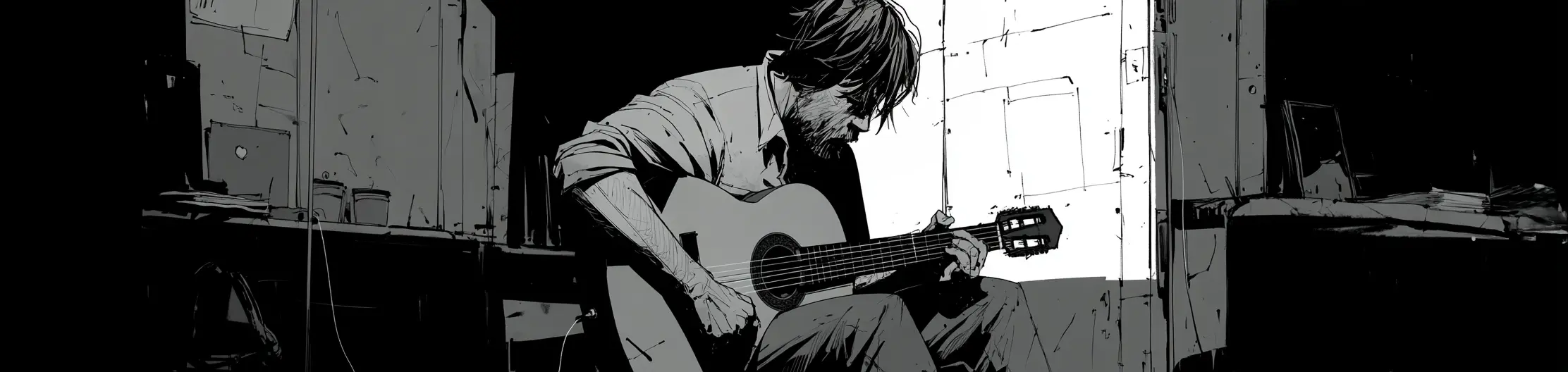
Those late-night sessions in the dark revealed how dependent I had become on visual cues. Initially, I fumbled through even familiar pieces, missing position shifts and struggling with precise finger placement. But within weeks, something remarkable happened. My proprioception—the sense of where my body is in space—dramatically improved. I could feel the spaces between frets more precisely, sense the exact tension needed in string bends, and navigate the fretboard with a confidence that had eluded me in fully lit practice sessions.
What Altenmüller's research helps us understand is that this improvement wasn't just subjective—it represented actual neurological adaptation. By removing visual feedback, I was forcing my brain to strengthen connections between motor commands and proprioceptive feedback, essentially building more robust neural pathways for physical intuition.
This finding has significant implications for practice methodology across all instruments. Deliberately practicing without visual feedback—whether by closing eyes, dimming lights, or using blindfolds—may accelerate the development of the physical intuition that separates advanced players from beginners. This approach seems particularly valuable for:
- Developing fretboard or keyboard geography without visual dependence
- Improving intonation on string instruments by heightening attention to tactile and auditory feedback
- Enhancing dynamic control by shifting focus from visual to auditory and kinesthetic cues
- Preparing for performance conditions where visual attention must be directed elsewhere (e.g., reading music, watching a conductor, engaging with an audience)
For teachers, incorporating structured "eyes-closed" segments into lessons might help students break through technical plateaus by developing the neural connections that support intuitive playing. For performers, this practice can build confidence for playing in varied lighting conditions—from dimly lit jazz clubs to brightly lit concert halls—by reducing dependence on visual feedback.
The research suggests that what might seem like a novelty approach—practicing in the dark—is actually a neurologically sound method for developing the System 1 pathways essential for fluid, intuitive performance.
Piano: Managing Multiple Voice Independence and Large-Scale Movements
The piano's large range and potential for complex polyphony create distinct practice challenges:
Coordination Between Hands: A 2020 study by Furuya et al. used motion capture technology to analyze expert pianists' movements, finding that professionals develop "coordinative structures" where multiple muscles operate as unified functional units—a hallmark of System 1 processing.
Specific Practice Recommendations:
- Voice Independence: Practice each voice separately with full conscious attention (System 2) before allowing them to become automated within the full texture
- Forearm Rotation vs. Finger Isolation: Begin with conscious monitoring of optimal biomechanics (System 2) before allowing natural movement patterns to emerge (System 1)
- Large-Scale Movements: Practice jumps and position shifts by first establishing conscious landmarks (System 2), then developing spatial intuition (System 1)
Interestingly, research by Jäncke (2012) found that professional pianists show increased gray matter in brain regions associated with spatial navigation—suggesting that piano practice enhances the brain's mapping systems in ways similar to those seen in taxi drivers navigating complex city layouts.
Percussion: Time-Keeping and Polyrhythmic Integration
For drummers and percussionists, the relationship between systems takes on a temporal dimension:
Limb Independence: A 2017 study by Diedrichsen and Kornysheva demonstrated that expert drummers develop specialized neural circuits that allow independent timing control across limbs—a System 1 capability built through extensive System 2 training.
Specific Practice Recommendations:
- Ostinato Development: Maintain a consistent pattern in one limb while consciously directing attention to another limb, then systematically shift attention while maintaining all patterns
- Micro-Timing Control: Begin with conscious metronome synchronization (System 2), then develop the ability to maintain precise timing without external reference (System 1)
- Groove Embodiment: After technical mastery, practice feeling rhythmic patterns as whole-body experiences rather than separate limb movements
A study by Kerr et al. (2019) found that professional drummers develop specialized neural synchronization patterns that allow them to maintain precise timing even while performing complex polyrhythms—demonstrating how System 1 can manage multiple simultaneous timing tasks that would overwhelm conscious System 2 processing.
Demystifying "Muscle Memory": What's Really Happening
The term "muscle memory" is widely used but often misunderstood. Contrary to popular belief, muscles themselves don't have memory—what we're actually discussing is a form of procedural memory stored in the brain, particularly in motor cortical areas, the basal ganglia, and the cerebellum.
The Neuroscience of Motor Learning
When we practice a movement pattern repeatedly, several neurological processes occur:
- Synaptic Strengthening: Repeated activation of specific neural pathways through practice strengthens synaptic connections through a process called long-term potentiation (LTP). Research by Rioult-Pedotti et al. (2007) demonstrated that intensive motor training increases synaptic strength in the primary motor cortex.
- Neuronal Recruitment: With practice, the brain learns to activate precisely the right motor neurons in the optimal sequence. A study by Classen et al. (2013) showed that after extensive practice, musicians recruit fewer but more specific motor units to perform the same movements, increasing efficiency.
- Myelination: As mentioned earlier, repetition accelerates the myelination process. A 2012 study by Scholz et al. used diffusion tensor imaging to show that just six weeks of intensive practice increased white matter (myelin) in relevant neural pathways.
- Cortical Reorganization: The brain actually allocates more neural real estate to heavily practiced movements. A famous study by Elbert et al. (1995) found that string players have enlarged cortical representations of the fingers of their left hand (used for fingering).
From Explicit to Implicit: The Feel It vs. Recall It Distinction
The transition from "recall it" to "feel it" learning represents the shift from explicit to implicit processing:
"Recall It" Learning (System 2):
- Characterized by conscious retrieval of instruction and rules
- Heavily dependent on working memory
- Requires attention and effort
- Performance deteriorates under pressure
- Movements tend to be segmented and mechanical
"Feel It" Learning (System 1):
- Characterized by intuitive, sensory-guided performance
- Independent of working memory
- Effortless and automatic
- Resilient under pressure
- Movements are fluid and integrated
Research by Masters and Maxwell (2008) demonstrated that performers who learn skills through implicit methods (minimal explicit instruction, focus on external outcomes) develop more robust performance capabilities, especially under pressure, compared to those who learn through explicit instruction and conscious control.
Achieving the Transition: Practical Strategies
How do we effectively move from "recall it" to "feel it" learning? Research suggests several effective approaches:
- External Focus of Attention: Studies by Wulf and colleagues (2016) found that focusing on the effects of movements (external focus) rather than the movements themselves (internal focus) accelerates the development of automatic control.
- Contextual Interference: Practicing variations of a skill in randomized order rather than blocked repetition has been shown to enhance retention and transfer. A study by Lin et al. (2013) with pianists found that those who practiced passages in random order developed more robust learning than those who practiced in blocked sets.
- Implicit Learning Techniques: Learning through methods that minimize explicit knowledge, such as analogy learning or dual-task conditions, promotes System 1 development. MacMahon and Masters (2002) demonstrated that performers who learned through analogies ("make your hand move like a swan's neck") developed skills that were more resistant to pressure than those who learned through explicit rules.
- Sensory Attunement Practices: Deliberately shifting attention to the sensory feedback associated with movement helps transition from consciously controlled to feedback-guided performance. Research by Ackerley et al. (2019) showed that musicians who engage in practices focusing on tactile and proprioceptive feedback develop enhanced sensory discrimination abilities that support intuitive performance.
When Practice Goes Wrong: Common Pitfalls in the System Transition
Understanding the dual-system model transforms practice—but implementing this approach comes with challenges. Let's explore common pitfalls and their solutions:
The Metronome Trap: Tempo Without Transition
A common mistake is believing that gradually increasing metronome speed alone will facilitate the System 2 to System 1 transition. Many musicians follow this pattern:
- Practice slowly with conscious control (System 2)
- Increase tempo in small increments
- Reach target tempo but struggle with fluency and expression
This approach fails because it maintains System 2 dominance throughout the process. Research by Duke et al. (2009) analyzed practice behaviors of pianists and found that those who simply increased tempo systematically showed poorer retention than those who varied their practice strategies.
The Solution: Rather than a linear tempo increase, implement a wave-like approach where you:
- Practice slowly with conscious attention to details (System 2)
- Briefly attempt faster tempos with focus on flow rather than perfection (System 1)
- Return to moderate tempos with a blend of conscious monitoring and automatic execution (transition zone)
- Repeat this cycle with gradually increasing average tempos
The Perfectionist's Dilemma: Overreliance on System 2
Many dedicated musicians become trapped in perpetual System 2 practice, constantly analyzing, correcting, and refining without ever developing System 1 fluency.
A 2018 study by Osborne et al. found that musicians with perfectionist tendencies showed higher cortisol levels during performance and relied excessively on explicit memory systems—precisely the System 2 overactivation that disrupts fluid performance.
The Solution: Schedule deliberate "imperfection practice" sessions where:
- You commit to playing through mistakes without stopping
- Focus shifts entirely to musical expression and flow
- Technical elements receive attention only between full performances
- Record these sessions and listen for expressive qualities rather than technical flaws
Psychologist Carol Dweck's research on growth mindset provides valuable context: those who view mistakes as learning opportunities rather than failures develop more robust skills and greater resilience.
The Premature Automation Problem: Encoding Errors
Another common pitfall occurs when musicians rush into automatic (System 1) playing before establishing correct patterns, essentially automating errors that become increasingly difficult to correct.
Motor learning research by Schmidt and Lee demonstrates that once movement patterns are automated, they resist modification—explaining why technical habits (both good and bad) become so ingrained.
The Solution: Implement a structured verification process:
- Record practice sessions and critically evaluate for accuracy
- Seek regular feedback from qualified teachers before habits solidify
- Use systematic checklists for technical elements during System 2 practice
- Incorporate regular "fundamentals review" even in advanced practice
The Transfer Gap: Practice Room vs. Performance Reality
Perhaps the most frustrating challenge is when skills that function perfectly in practice disintegrate under performance conditions—a clear sign that System 1 hasn't been properly developed for performance contexts.
Studies by Oudejans and Pijpers (2009) demonstrated that skills practiced only under low-pressure conditions often fail under high-pressure conditions due to inappropriate system activation.
The Solution: Implement progressive performance simulation:
- Create artificial pressure in practice (record yourself, invite listeners)
- Practice performance visualization with physiological awareness
- Conduct "performance experiments" with increasing stakes (from playing for one friend to larger groups)
- Analyze performance breakdowns specifically in terms of system interference
Performance Anxiety and the System Disruption: Breaking the Cycle
Performance anxiety represents the ultimate collision between our dual processing systems. Understanding this interaction provides powerful tools for managing performance stress.
The Neurobiology of Performance Anxiety
When we experience performance anxiety, several neurological processes occur:
- Sympathetic Nervous System Activation: The brain's threat-detection system triggers the release of adrenaline and cortisol—creating the familiar symptoms of racing heart, shallow breathing, trembling, etc.
- Working Memory Disruption: Anxiety consumes cognitive resources, reducing the capacity available for conscious processing. A landmark study by Beilock and Carr (2005) demonstrated that pressure specifically impairs explicit (System 2) processes while leaving implicit (System 1) processes relatively intact.
- System 2 Hijacking: Perhaps most destructively, anxiety often triggers panic-driven attempts to consciously control processes that should be automatic. Neuroimaging research by Masters et al. (2019) showed that anxious performers show increased activity in prefrontal regions associated with conscious control—precisely when they should be relying on automatic processing.
- Attentional Narrowing: Anxiety creates hyperfocus on potential threats, including internal sensations and potential mistakes. Research by Oudejans et al. (2017) found that anxious musicians tend to focus narrowly on technical elements rather than broader musical goals.
This creates what performance psychologists call the "paradox of control"—the more desperately we try to consciously control automatic processes under pressure, the more we disrupt them.
Breaking the Cycle: System-Specific Interventions
Understanding how anxiety differentially affects System 1 and System 2 allows for targeted interventions:
System 1 Reinforcement Strategies
- Overlearning: Practice beyond mere competence to establish robust automatic processes. Research by Driskell et al. (2014) found that skills practiced to 150% of mastery criteria show significantly better retention under pressure.
- Pressure Inoculation Training: Gradually increasing performance pressure during practice develops System 1 resilience. A study by Oudejans and Pijpers (2010) with professional musicians found that those who practiced under mild anxiety showed improved performance under high-pressure conditions.
- Pre-Performance Routines: Develop consistent pre-performance sequences that activate appropriate attentional states. Research by Mesagno and Mullane-Grant (2010) demonstrated that structured pre-performance routines significantly reduced choking under pressure.
- Implicit Cues: Develop simple words or images that trigger well-learned movement patterns without detailed conscious instruction. Sport psychologists call these "holistic cues"—single words or images that encapsulate entire movement patterns without decomposing them into explicit steps.
System 2 Management Strategies
- Cognitive Restructuring: Change how you interpret physiological arousal. A groundbreaking study by Crum et al. (2013) found that viewing stress as enhancing rather than debilitating significantly improved performance under pressure.
- Attentional Control Training: Practice deliberately shifting attention between internal and external focus points. Research by Wulf and Su (2007) demonstrated that maintaining an external focus under pressure protects against performance degradation.
- Working Memory Buffering: Reduce cognitive load before performances through organization, preparation, and simplification. Studies by Beilock and DeCaro (2007) showed that reducing working memory demands helps maintain performance under pressure.
- Acceptance-Based Approaches: Rather than fighting anxiety, practice accepting sensations while maintaining performance focus. Research by Gardner and Moore (2007) on "mindfulness-acceptance-commitment" approaches found improved performance compared to traditional anxiety reduction methods.
Personal Experience: The Communication Shift
The research on attentional focus during performance resonates deeply with my own journey as a performer. For years, I approached performances with an intense focus on technical execution—mentally tracking finger positions, rhythmic precision, and all the mechanical elements I had practiced. The results were predictably disappointing: tension, memory slips, and performances that felt mechanical even when technically accurate.
The breakthrough came when I shifted my focus from technical perfection to communicating with the audience. Rather than thinking about the mechanics of playing, I began concentrating on the emotional narrative I wanted to convey through the music. This simple shift—from internal focus to external focus—produced a remarkable transformation in my performance quality.
What the research by Wulf and Su helps us understand is why this approach works so effectively. By focusing on communication and expression—aspects that naturally engage System 1—I was strategically directing my attention away from the technical elements that would trigger System 2 interference. This wasn't avoiding responsibility for technical preparation; rather, it was acknowledging that by performance time, technical elements needed to be entrusted to my well-trained System 1 processes.
The most compelling evidence of this effect came during high-pressure performances where, in the past, anxiety would have triggered a cascade of technical overthinking. With my attention firmly anchored in communicative intent rather than technical execution, I found myself able to maintain flow state even under significant pressure. The anxiety symptoms were still present—racing heart, sweaty palms—but they no longer disrupted my performance because my attention was directed toward expressive goals rather than internal mechanics.
This experience aligns perfectly with the research on external focus and suggests a powerful reframing of performance preparation: we should practice not just the notes themselves, but the attentional state we want to maintain during performance. For teachers, this means explicitly helping students develop the skill of directing attention toward communicative aspects of music rather than technical mechanics—a skill that may be as important as technical facility in determining performance success.
Personal Experience: Reframing Physiological Arousal
The research by Crum et al. on cognitive restructuring connects directly to another transformative insight from my performance journey. For years, I interpreted the physical symptoms of performance anxiety—racing heart, shallow breathing, trembling hands—as signs that something was wrong, that I wasn't prepared enough or wasn't cut out for performance. This interpretation created a negative feedback loop: feeling anxious made me worry about being anxious, which increased anxiety further.
The breakthrough came from a simple but profound shift in language. I began deliberately telling myself "I'm excited" rather than "I'm nervous" before performances. This wasn't mere positive thinking or denial of reality—the physical symptoms remained exactly the same. What changed was my interpretation of those symptoms.
Remarkably, this small cognitive shift produced tangible changes in my performance quality. The same racing heart that once felt debilitating now felt energizing. The same adrenaline that once caused my hands to shake now seemed to heighten my focus and responsiveness. The physiological state hadn't changed at all—but my relationship to it had transformed completely.
What Crum's research helps us understand is that this isn't just psychological trickery—it reflects fundamental neurological realities about how our interpretations shape our experiences. The physiological signatures of anxiety and excitement are nearly identical: elevated heart rate, increased respiration, heightened alertness. The primary difference lies in how we cognitively frame these sensations.
By reframing pre-performance arousal as "excitement" rather than "nervousness," I was effectively redirecting neural activity from threat-response pathways (which trigger System 2 interference) to reward-anticipation pathways (which can actually enhance System 1 performance). This simple cognitive shift essentially changed which neural networks were processing the same physiological data.
For musicians at all levels, this suggests a powerful approach to performance preparation: rather than trying to eliminate performance anxiety (which may be physiologically impossible), we can practice reinterpreting those sensations as helpful resources for performance. This might involve:
- Deliberate language shifts ("I'm excited" vs. "I'm nervous")
- Focusing on opportunity aspects of performance rather than threat aspects
- Connecting physiological arousal to enhanced expressivity rather than technical disruption
- Practicing the reframing process itself during lower-stakes performances
The research and my experience suggest that how we talk to ourselves about our physiological state may be as important as the technical preparation we undertake.
The Integrated Performance Psychology Approach
Most effective performance anxiety management combines these approaches into an integrated strategy that recognizes both systems:
- Build robust System 1 processes through deliberate practice structured around the three-phase approach discussed earlier
- Develop System 2 management skills through attention control, cognitive restructuring, and acceptance practices
- Create clear system handoff protocols through pre-performance routines and attentional cues
- Practice the entire performance process, not just the music itself
A fictional violinist named Michael provides an illustrative example. After struggling with performance anxiety for years despite excellent practice habits, Michael restructured his approach:
- During practice, he incorporated regular "performance simulation" segments where he deliberately played through challenging passages without stopping, regardless of mistakes
- He developed a specific pre-performance routine including physical movement, breathing exercises, and visualization
- He identified key "anchor points" in difficult passages—moments where he would briefly engage conscious attention before returning to flow state
- Rather than fighting anxiety symptoms, he practiced acknowledging them while redirecting attention to expressive goals
The results transformed his performance experience—not by eliminating anxiety, but by changing his relationship with it and developing system-appropriate responses.
The research is clear: anxiety management, like skill development itself, requires understanding and working with our dual processing systems rather than fighting against them.
Cross-Domain Applications: Beyond Music to Other Creative Skills
The principles of dual-system learning extend naturally to other creative domains:
Drawing and Visual Arts
The System 1/System 2 dynamic in visual arts parallels music in remarkable ways:
Observational Drawing: Beginners consciously analyze shapes, proportions, and relationships (System 2), while experienced artists perceive and represent visual information holistically and intuitively (System 1).
Betty Edwards' influential book "Drawing on the Right Side of the Brain" essentially describes the transition from System 2 to System 1 in visual perception and representation. Research by Chamberlain et al. (2014) used eye-tracking technology to show that expert artists perceive visual scenes differently than novices, extracting structural information more efficiently—a classic System 1 characteristic.
Practice Recommendations:
- Begin with analytical approaches (measuring proportions, breaking complex forms into simple shapes)
- Transition through exercises that develop perceptual chunking (quick gesture drawing, blind contour drawing)
- Progress to intuitive, expressive drawing where technical elements recede from conscious awareness
Personal Experience: From Notes to Patterns
This transformation in perception is something I've experienced firsthand in my development as a guitarist. When I first began learning scales, I approached them as discrete collections of individual notes that required conscious thought to navigate. I would mentally calculate each note ("That's a G... now A... now B-flat") as I moved through a scale pattern. This System 2-dominant approach was cognitively demanding and resulted in halting, mechanical playing.
The transformation came gradually but distinctly. After consistent practice, I began perceiving scales not as individual notes but as unified shapes and patterns across the fretboard. What had once been a series of discrete calculations became a single, integrated visual and kinesthetic map that I could navigate intuitively. I no longer needed to think about individual notes—my fingers could move through these patterns with a fluidity that wasn't possible when I was consciously processing each note.
This shift in perception perfectly illustrates what Chamberlain's research reveals about expertise development. Just as expert artists extract structural information from visual scenes more efficiently than novices, experienced musicians develop the ability to perceive musical structures (scales, chord progressions, rhythmic patterns) as integrated wholes rather than collections of individual elements.
What's particularly fascinating is that this perceptual shift isn't just a matter of faster processing—it's a fundamentally different way of experiencing the instrument. The fretboard that once seemed like a complex grid of possibilities requiring constant calculation now feels like a familiar landscape that I can navigate intuitively. This transformation represents the classic System 2 to System 1 shift that characterizes expertise development across domains.
For teachers, this insight suggests the importance of helping students develop this perceptual chunking ability deliberately—perhaps by practicing visualization exercises away from the instrument, using pattern-recognition games, or deliberately practicing the skill of "zooming out" to perceive larger musical structures rather than individual notes.
Singing and Vocal Performance
Vocal technique presents unique challenges because the instrument is internal:
Technical Foundations: Beginning singers must consciously control breath support, laryngeal position, and resonance (System 2), while experienced singers develop integrated coordination of these elements without conscious monitoring (System 1).
Research by Kleber et al. (2010) used fMRI to compare brain activity in professional and amateur singers, finding that professionals showed reduced activity in regions associated with conscious motor planning and increased activity in sensorimotor integration areas—precisely the System 2 to System 1 shift we've been discussing.
Practice Recommendations:
- Begin with isolated technical exercises focusing on specific vocal parameters (breath control, resonance placement)
- Progress through exercises that integrate multiple technical elements while maintaining conscious awareness of each
- Advance to expressive performance where technical elements are monitored primarily through auditory and proprioceptive feedback rather than conscious control
Dance and Movement Arts
Dance illustrates the System 1/System 2 dynamic particularly clearly:
Technique vs. Expression: Beginning dancers focus on correct placement and execution of movements (System 2), while advanced dancers embody movement qualities and express emotional content through integrated movement (System 1).
A fascinating study by Bläsing et al. (2012) used motion capture to analyze dancers at different expertise levels, finding that experts' movements show greater temporal and spatial consistency despite less conscious monitoring—evidence of System 1 dominance.
Practice Recommendations:
- Begin with technical focus on placement, alignment, and specific movement qualities
- Transition through exercises that develop kinesthetic awareness and sensory attunement
- Progress to expressive performance where technical elements are integrated into holistic movement experiences
In each of these domains, the fundamental principle remains the same: mastery requires building strong foundations through System 2, developing effective transitions between systems, and ultimately allowing well-trained System 1 processes to guide performance.
Real-World Application: A Week in the Practice Room
Let's see how this framework might translate to a practical practice regimen. Imagine a fictional cellist named Sofia preparing Bach's Prelude from Cello Suite No. 1. Her weekly practice might look like this:
Monday-Tuesday: System 2 Dominant Practice (40%)
- 30 minutes: Slow practice of difficult passages with attention to left-hand position
- 20 minutes: Bow distribution analysis and practice
- 20 minutes: Harmonic analysis of selected passages
- 20 minutes: Intonation work with drones
Wednesday-Thursday: Transition Practice (40%)
- 25 minutes: Moderate-tempo practice with shifting attention focus
- 25 minutes: Rhythmic variations that develop chunking abilities
- 20 minutes: Alternating between technical focus and expressive focus
- 20 minutes: "One eye open" practice (maintaining partial awareness of technique while developing flow)
Friday-Saturday: System 1 Dominant Practice (20%)
- 20 minutes: Full-tempo run-throughs with focus on musical storytelling
- 15 minutes: Performing for recording device or friends
- 15 minutes: Deliberate practice of performance mindset and stress management
- 10 minutes: Slightly above-tempo practice to build reserve capacity
Sunday: Integration
- 30 minutes: Mixed practice cycling through all three phases
- 20 minutes: Reflection and planning for next week's focus
Notice how Sofia dedicates proportionally more time to System 2 and transition practice than to System 1 practice—recognizing that the foundation must be solid before intuitive performance can flourish.
The Neuroscience Frontier: Recent Discoveries
Recent advances in cognitive neuroscience continue to deepen our understanding of these learning systems. A 2023 study using functional magnetic resonance imaging (fMRI) observed professional musicians during both practice and performance, finding distinct patterns of brain activation corresponding to our System 1 and System 2 framework.
Particularly interesting was the discovery of what researchers called "neural handshaking"—specific patterns of brain activity that occur during the transition between deliberate and automatic processing. This neurological finding supports our emphasis on the transition phase as a distinct practice focus.
Another fascinating study examined the role of the cerebellum in automating complex motor sequences. The research found that after extensive practice, cerebellar circuits can bypass the slower cortical pathways entirely—explaining how musicians can execute passages at speeds that exceed conscious processing capabilities.
These scientific advances confirm what master musicians have intuited for centuries: virtuosic performance emerges when well-trained automatic systems are allowed to operate without conscious interference.
A Personal Reflection: My Journey Between Systems
Returning to my own experience with Bach's Prelude, what my mentor helped me discover was the critical importance of the transition between systems. I had been stuck in System 2—deliberate, analytical, controlling—without developing the bridge to System 1 performance.
When I finally understood this dynamic, my practice transformed. Rather than simply alternating between slow technical work and full-speed attempts, I began deliberately practicing the transition itself—playing at moderate tempos while systematically shifting my attention between technical details and expressive flow.
The results were transformative. The piece began to breathe and flow naturally, without sacrificing the technical clarity I had built through slow practice.
This experience fundamentally changed my relationship with practice. I realized that mastery isn't about perfect control—it's about perfect training followed by perfect trust.
Practicing with Two Minds
The old adage "practice slow to play fast" contains profound wisdom, but it's only part of the story. A more complete paradigm recognizes the dual nature of our learning systems and deliberately trains both:
- System 2 practice builds the foundation through slow, deliberate attention to detail
- Transition practice builds the bridge between conscious and automatic processing
- System 1 practice builds performative intuition through guided expressive experience
By understanding and implementing this integrated approach, musicians can transcend the limitations of traditional practice methods and achieve both technical precision and expressive freedom.
The next time you sit down to practice, ask yourself: Which system am I training right now, and is that the right focus for this stage of learning?
The answer might transform not just how you practice, but how you ultimately perform.
---
This article represents my synthesis of research and experience in musical practice and skill acquisition. The fictional scenarios presented are designed to illustrate concepts rather than represent real individuals or events.