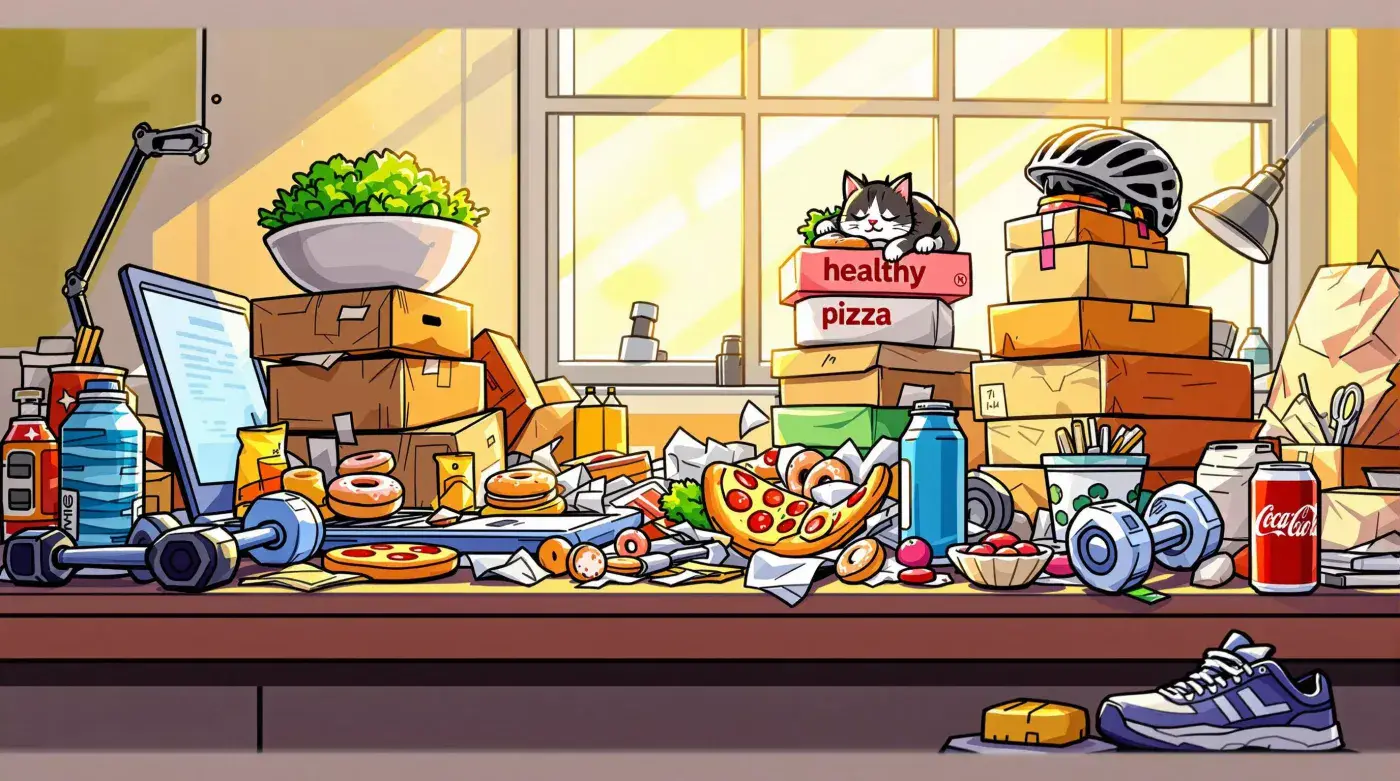
Let's be honest—my health and wellness story isn't the kind you'd find in an inspirational memoir. It's more like the blooper reel that comes with a warning: _"Don't try this at home."_ I've skipped workouts with the dedication of a Netflix binger, relied on "instant" food that would make a nutritionist weep, and let ADHD turn my time management into a masterclass in creative procrastination. Add in years of neglecting my body and mind (with a healthy dose of outright abuse), and here I am—diabetic, running on faulty parts, and wondering if I've accidentally signed up for some cosmic prank.
I've got my fair share of health problems—diabetes is the headliner, but let's not forget the growing list of aches, pains, and warning signs from a body that's been through too many years of bad decisions. Whether it's pushing through stress instead of addressing it, overloading myself with work, or treating exercise like an optional hobby instead of a necessity, I've spent far too long ignoring the flashing red lights on my own dashboard.
The truth? A lot of this is my fault. I've let workaholism and procrastination become my go-to coping mechanisms, and I've leaned way too hard on "future me" to deal with the consequences. But now "future me" is "present me," and it's clear that I need to start listening to my body before the faulty parts become full-blown system failures.
So, I'm taking a different approach. I'm learning to _manage stress_ before it spirals into burnout. I'm figuring out how to work with my ADHD instead of letting it derail me. I'm trying to turn cycling—one of the few physical activities I truly enjoy—into a regular part of my life, not just a once-in-a-while escape. And when it comes to _diet and exercise,_ I'm finally admitting that frozen pizza doesn't count as self-care, no matter how convenient it is.
This isn't easy. Imposter syndrome and self-doubt are constant companions, whispering that I'm not good enough or that I'll fail again. But I've decided it's okay to fail as long as I keep trying. I don't need perfection; I just need progress—and maybe a little less wear and tear on the engine while I'm at it.
From Faulty Parts to Functioning Human: Rebuilding One Habit at a Time
This journey covers it all: _stress management_, _ADHD strategies_, _diet and exercise_, _balancing work and rest_, and tackling the realities of living with _chronic health problems_ like diabetes. Every step is messy, imperfect, and full of lessons—but it's a journey worth taking.
The ADHD Factor: When Your Brain Has Other Plans
Living with ADHD means my relationship with health routines is... complicated. I'll hyperfocus on a new workout plan for two weeks, convinced I've found the solution to all my problems, only to completely forget it exists by week three. My supplement cabinet is a graveyard of half-empty bottles purchased during enthusiastic health kicks that fizzled out faster than a cheap sparkler.
The challenge isn't knowing what to do—it's doing it consistently. My brain craves novelty and resists routine, even when that routine is exactly what my body needs. I've had to learn that what works for neurotypical people often doesn't work for me. I need systems with built-in flexibility, visual reminders that are impossible to ignore, and enough variety to keep my interest without becoming overwhelming.
Diabetes: The Unwelcome Passenger
Getting diagnosed with diabetes was my wake-up call, though I'll admit I hit the snooze button a few times before actually waking up. It's a daily reminder that my body isn't invincible and that the choices I make matter—not in some abstract future sense, but right now, today, as my glucose monitor beeps with approval or disappointment.
Managing diabetes has taught me more about nutrition than I ever wanted to know. I've learned to read food labels like detective novels, looking for the hidden sugars and carbs lurking in seemingly innocent foods. I've discovered that my body responds differently to the same meal depending on stress, sleep, and a dozen other factors that make diabetes management feel like trying to solve a Rubik's cube that keeps changing colors.
But it's also forced me to be more mindful about what I eat and how I move, which is probably something I should have been doing all along.
Work-Life Balance: The Eternal Struggle
As someone who loves what they do, the line between work and life has always been blurry. My laptop is practically an extension of my body, and "just checking email" has turned into three-hour work sessions more times than I can count. This always-on mentality has taken its toll, contributing to stress, poor sleep, and a general sense that I'm never quite doing enough—despite working more hours than is remotely healthy.
I'm learning (slowly, reluctantly) that rest isn't just a luxury—it's essential maintenance. My productivity actually improves when I take breaks, get enough sleep, and occasionally disconnect from the digital world. Who knew?
The Path Forward: Imperfect Progress
I don't have all the answers. Some days I nail my health goals; other days I fall spectacularly off the wagon. But I'm trying to approach this journey with more compassion and less judgment. I'm celebrating small wins, learning from setbacks, and gradually building a healthier relationship with my body and mind.
If there's one thing I've learned, it's that health isn't a destination—it's an ongoing conversation with yourself. And sometimes, the most important part of that conversation is simply showing up, even when it's messy, even when it's hard, and even when you'd rather be doing literally anything else.
So here's to the imperfect journey, to the two-steps-forward-one-step-back dance of trying to be healthier in a world that often makes it challenging. I may never be the person posting perfect meal prep photos or running marathons, but I'm working on becoming someone who treats their body with the care and respect it deserves—most of the time, anyway.
And for now, that's enough.