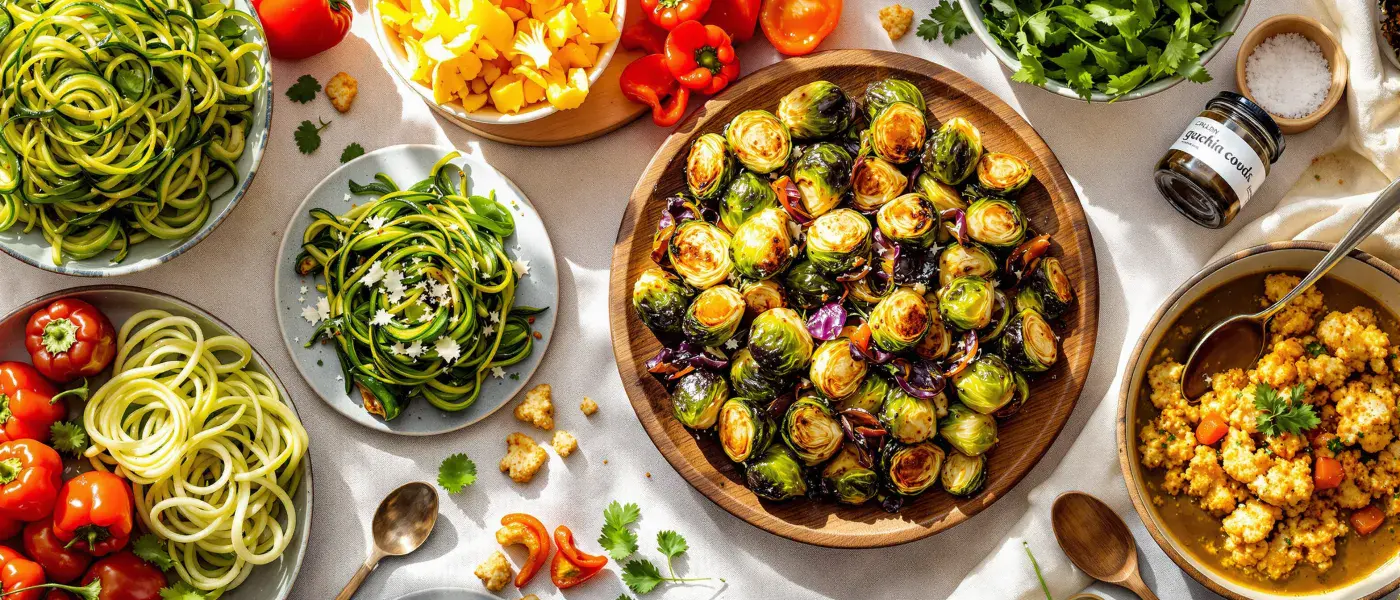
I am a fat American man who craves carbs to the core. My God, bread and pasta are heaven—pillowy, buttery, soul-soothing perfection. But let’s be honest: they’re also part of what got me into this mess. Years of overindulging in carbs, paired with a general neglect of my health, landed me squarely in the world of diabetes. When I got my diagnosis, I knew I had to make some serious changes, and one of the first things to go was the carb-heavy foods I loved so much.
At first, it felt like a punishment. What was left when you stripped away bread, pasta, rice, and potatoes? My plate seemed depressingly empty. But then I discovered a silver lining in the form of non-starchy vegetables. These humble plants, the very ones I used to push to the side of my plate as a kid, have become my lifeline. They’re more than just “rabbit food” to me now—they’re the key to making my meals both healthy and exciting.
---
What Are Non-Starchy Vegetables?
In the simplest terms, non-starchy vegetables are low in carbohydrates and calories but high in fiber, vitamins, and minerals. These are your leafy greens, cruciferous veggies, and colorful plants that pack a nutritional punch without spiking your blood sugar.
Some examples include:
- Leafy Greens: Spinach, kale, arugula, bok choy
- Cruciferous Vegetables: Broccoli, cauliflower, Brussels sprouts, cabbage
- Other Veggies: Zucchini, bell peppers, cucumbers, asparagus, green beans
The best part? These vegetables have such a low glycemic index (GI) that they hardly make a dent in your blood sugar. They’re the “freebies” of the vegetable world, allowing you to pile them on your plate without worry.
---
Why Non-Starchy Vegetables Matter for Diabetics
Non-starchy vegetables are the unsung heroes of diabetic meal planning for several reasons:
- Blood Sugar Stability: Since they’re low in carbs, they don’t contribute to the dreaded post-meal glucose spike. Pair them with a protein or healthy fat, and they slow the absorption of other carbs, creating a steady, stable blood sugar response.
- Fiber is Your Friend: Fiber helps with digestion and prolongs the feeling of fullness. This is especially important when you’re trying to manage weight, a key factor in diabetes control.
- Nutrient Density: Packed with essential vitamins, minerals, and antioxidants, non-starchy vegetables give your body what it needs without the carb overload.
- Variety and Flavor: When your food landscape is suddenly peppered with restrictions, non-starchy vegetables bring back the excitement. Their textures and flavors transform otherwise plain dishes into meals worth looking forward to.
---
The Fine Line Between “Healthy” and “Diabetic-Friendly”
While some vegetables seem like obvious choices for a healthy diet, they can be misleading for diabetics due to their higher carb content. Here’s a quick breakdown:
- Corn, Peas, and Potatoes: Often marketed as “veggie-forward,” these starchy options pack a hefty carb load. A single ear of corn or half a cup of peas can have more carbs than you’d expect, so they’re better in moderation.
- Sweet Potatoes: Though nutrient-dense and low on the glycemic index, they’re still relatively high in carbs. A small serving is fine, but don’t treat them like non-starchy vegetables.
- Carrots and Beets: While not starchy in the traditional sense, their natural sugars can add up quickly if you’re not careful with portion sizes.
---
Transforming the Plate
The hardest part about managing diabetes isn’t necessarily _what_ to eat—it’s figuring out how to make it exciting enough to stick with long-term. When I first started down this road, I was staring at a plate of plain chicken breast and steamed broccoli, wondering if this was it. This bland, joyless landscape of “safe” food felt like punishment, and I knew if I didn’t find a way to make it better, I’d never stick with it. Thankfully, living in different countries opened my eyes to how vegetables—non-starchy ones in particular—could transform a meal into something I actually looked forward to.
---
The U.S.: A Bland Start
It all started in the U.S., where I grew up with a very utilitarian view of vegetables. They were either an afterthought, like the boiled carrots and mushy green beans you’d push around on a plate, or an unhealthy vehicle for butter and cheese—hello, green bean casserole. I didn’t have much of a reason to get excited about vegetables, they were just a side dish. My early days managing diabetes reflected this. My meals were practical and plain, focusing on the basics: grilled chicken, a small serving of brown rice, and a sad pile of steamed broccoli. It was functional, sure, but soul-crushingly boring.
---
The Philippines: A Flavorful Awakening
Then I travelled to and lived in the Philippines, and everything changed.
The Philippines is where I learned that vegetables could have _character_. Take kangkong (water spinach), for example—it’s a common leafy green that’s anything but boring. One of the first times I had it was in adobong kangkong, where it was stir-fried with soy sauce, garlic, and a splash of vinegar. The tangy, savory flavor made me forget I was even eating something “healthy.”
Then there was malunggay (moringa leaves), a superfood that I’d never even heard of in the U.S. It became a staple in my soups, especially tinola, a light chicken soup with ginger, papaya, and malunggay. The leaves added this subtle earthiness that brought the dish together. Even vegetables like ampalaya (bitter melon)—which, true to its name, is incredibly bitter—had their place. I learned that if you stir-fry it just right, with eggs and a bit of seasoning, it becomes this wonderfully complex side dish.
Shopping for vegetables in the Philippines was an adventure in itself. I’d walk through the wet markets, surrounded by piles of fresh produce I couldn’t even name. Vendors would call out prices, hand me bundles of greens, and give cooking tips in Tagalog. It was here that I realized just how much variety there was beyond the boring vegetables I’d grown up with.
---
Singapore: Refinement and Fusion
When I moved to Singapore, my vegetable journey took another leap forward. Singapore is a melting pot of cultures—Malay, Chinese, Indian, and more—and its cuisine reflects that diversity. Vegetables here weren’t just part of the meal; they were infused with bold, complex flavors that made them irresistible.
Take bok choy, for example. It’s a simple leafy green, but when stir-fried with garlic, sesame oil, and just a splash of soy sauce, it transforms into this rich, savory dish that feels indulgent without being heavy. Or choy sum, another leafy green, which I’d often find blanched and drizzled with oyster sauce at hawker centers. Even humble long beans (think string beans, but longer and crunchier) were stir-fried with sambal, a spicy chili paste, giving them this fiery, addictive kick.
Singapore also introduced me to spaghetti squash and other Western-style low-carb vegetable alternatives that were far more accessible than they’d been in the Philippines. I started experimenting with dishes like zucchini noodles (zoodles), tossing them with pesto or marinara sauce.
---
A New Kind of Comfort
Looking back, I never thought I’d get excited about vegetables. Growing up in the U.S., they were the bland “eat-your-greens” chore on my plate. But living in the Philippines and now Singapore has completely changed how I see them. Vegetables aren’t just something I have to eat—they’re something I _want_ to eat.
Diabetes may have taken bread and pasta off my plate (for the most part), but it’s given me a whole new appreciation for the foods I once ignored. Whether it’s roasted Brussels sprouts, stir-fried bok choy, or a bowl of tinola with malunggay, these vegetables remind me that food can still be joyful—even when it’s healthy. And for a carb-craving, bread-loving guy like me, that’s no small thing.
Some References for You
| Vegetable | U.S. | Philippines | Singapore |
|---|---|---|---|
| Leafy Greens | Kale, Spinach, Arugula, Romaine | Malunggay (Moringa), Kangkong | Bok Choy, Choy Sum, Kai Lan |
| Cabbages | Green Cabbage, Red Cabbage | Petchay (Chinese Cabbage) | Napa Cabbage, Kai Choy |
| Cruciferous Vegetables | Broccoli, Cauliflower, Brussels Sprouts | Broccoli, Cauliflower | Broccoli, Cauliflower |
| Zucchini/Squash | Zucchini, Yellow Summer Squash | Kalabasa (Native Pumpkin Leaves & Tips) | Zucchini, Pumpkin Leaves |
| Beans | Green Beans, Snap Peas | Sitaw (String Beans), Sigarilyas (Winged Beans) | Long Beans (Snake Beans) |
| Bell Peppers | Green, Red, Yellow Bell Peppers | Bell Peppers | Bell Peppers |
| Asparagus | Green and White Asparagus | Imported (less common) | Green Asparagus |
| Mushrooms | Button, Portobello, Shiitake | Shiitake, Wood Ear Mushrooms | Enoki, Shiitake, King Oyster |
| Cucumber | English, Persian Cucumbers | Pipino (Native Cucumber Varieties) | Japanese Cucumber |
| Eggplant | Globe Eggplant | Talong (Small Purple Eggplant) | Asian Eggplant (Long Purple) |
| Okra | Okra | Okra (Lady’s Finger) | Okra |
| Tomatoes | Cherry, Roma, Heirloom | Kamatis (Native Tomatoes) | Roma, Cherry Tomatoes |
| Radish | Red Radish | Labanos (White Radish) | Daikon (Japanese Radish) |
| Leeks/Scallions | Leeks, Green Onions (Scallions) | Sibuyas Tagalog (Native Scallions) | Spring Onions |
| Herbs | Parsley, Cilantro, Dill | Wansoy (Cilantro), Kinchay | Coriander, Thai Basil |
| Seaweed | Nori, Wakame | Lato (Sea Grapes) | Seaweed Salad, Wakame |