
Are quantum computers going to steal your passwords, decrypt your photos, and expose every private conversation?
Not tomorrow. Not with the machines available today. And not in the simple, cinematic way the question suggests.
The serious risk is narrower and more operational. A sufficiently capable quantum computer would break several mathematical assumptions used by modern public-key cryptography. We do not know when such a machine will exist. We do know that encrypted material can be copied now, that some secrets remain valuable for decades, and that cryptographic migrations through protocols, products, certificates, devices, vendors, and trust stores take years.
That changes the engineering question. It is not, "When will quantum computers destroy encryption?" It is, "Which cryptographic promises need to survive longer than our ability to replace them?"
A bridge engineer does not wait for a support cable to snap before planning its replacement. The engineer inventories the structure, models its service life, stages the work, tests the replacement, and keeps traffic moving. They also do not evacuate the city because a new cable material passed certification.
Post-quantum cryptography deserves the same posture. The threat is real. The arrival date is uncertain. The work is a long-horizon infrastructure migration, not a universal emergency patch.
Consider a 2026 architecture review with three assets: a public website whose TLS sessions matter for minutes, a medical imaging archive whose records remain sensitive for decades, and an industrial gateway expected to accept signed firmware updates for 15 years. All three use cryptography. They should not receive the same migration priority.
Thesis: Post-quantum preparation is a long-horizon infrastructure migration, not a universal emergency patch.
Why now: NIST has finalized core post-quantum standards while protocols, products, and deployed systems still need staged migration paths.
Who should care: Teams responsible for long-lived confidential data, signing trust, devices, infrastructure, and cryptographic policy.
Bottom line: Migrate cryptographic promises that may outlive their current mathematics, while preserving staged testing and recovery.
Key Ideas
- Quantum algorithms threaten common public-key systems much more directly than they threaten modern symmetric encryption and hashing.
- "Harvest now, decrypt later" makes the protection lifetime of data more important than a confident prediction about quantum-computer arrival.
- NIST has finalized core post-quantum standards, but a standard primitive is not the same thing as a migrated protocol, product, or fleet.
- Urgency belongs to each cryptographic dependency. Inventory, service life, migration lead time, and consequence should determine what moves first.
Quantum Changes a Few Load-Bearing Assumptions
Classical cryptography works by choosing mathematical problems that are easy to perform in one direction and impractical to reverse without a secret.
RSA relies on the practical difficulty of factoring a very large composite integer. Multiplying two large primes is easy. Recovering those primes from their product is hard enough on classical computers, at appropriate key sizes, to support encryption and signatures.
Finite-field Diffie-Hellman relies on the discrete logarithm problem. Elliptic-curve cryptography, or ECC, uses a related discrete logarithm problem on elliptic curves. ECC achieves strong classical security with relatively compact keys, which is why elliptic-curve key exchange and signatures appear across TLS, messaging, mobile systems, hardware tokens, and embedded devices.
Peter Shor's 1994 algorithm changed the theoretical landscape. On a large, fault-tolerant quantum computer, it can solve integer factorization and discrete logarithms efficiently enough to invalidate the assumptions behind RSA, traditional Diffie-Hellman, and ECC.
The qualifier matters: large and fault-tolerant. The relevant machine is not a laptop, a noisy laboratory demonstration, or a vendor's qubit count. It is a cryptographically relevant quantum computer, meaning one capable of attacking real deployed key sizes with sufficient reliability. NIST still describes that machine as a future threat that may be years or decades away.
Nothing about Shor's algorithm means a current quantum service can passively decrypt ordinary HTTPS traffic. It also does not mean every security mechanism fails at once. It means several load-bearing public-key assumptions have a credible future replacement requirement.
The quantum threat is not broad because every algorithm becomes weak. It is serious because the exposed algorithms sit underneath identity, key establishment, and trust.
That is why a narrow cryptographic break can have wide system consequences. If an attacker can recover a key-establishment secret, confidentiality can fail. If an attacker can forge a still-trusted signing key, authenticity can fail. If the vulnerable primitive is built into hardware, firmware, certificates, and protocols, replacement can be slower than the mathematics.
Quantum Does Not Flatten Cryptography Equally
Symmetric cryptography uses the same secret for encryption and decryption. Hash functions map input into fixed-size output and underpin integrity checks, password storage constructions, signatures, and many other mechanisms. Quantum algorithms affect these families too, but not in the same way Shor's algorithm affects RSA and ECC.
Grover's algorithm provides a quadratic speedup for unstructured search. In an idealized model, brute-forcing a key space of size N takes on the order of sqrt(N) quantum queries instead of N classical trials. That is a meaningful reduction in security margin. It is not a polynomial-time collapse of the underlying primitive.
This is why AES-256 is commonly used as the conservative planning reference. A simplistic reading treats Grover as reducing its ideal brute-force margin toward the scale of a 128-bit classical search, while practical quantum resource costs and limited parallelization make the real attack far more demanding than that sentence implies. NIST's PQC evaluation framework expects modern symmetric primitives to retain significant resistance to quantum cryptanalysis.
Hash functions also require quantum-aware analysis, particularly when collision resistance, preimage resistance, output length, or signature construction matters. But "quantum breaks hashing" is too crude to guide a design review. The function, output size, attack goal, and protocol context all matter.
| Cryptographic job | Common present-day primitives | Known quantum pressure | Practical engineering posture |
|---|---|---|---|
| Public-key encryption and key establishment | RSA, finite-field DH, ECDH | Shor attacks factorization and discrete logarithms on a sufficiently capable machine | Plan replacement with standardized PQ or hybrid mechanisms |
| Digital signatures | RSA signatures, DSA, ECDSA, EdDSA | Shor threatens the underlying classical public-key assumptions | Migrate trust anchors, signing services, verifiers, and artifact formats |
| Symmetric encryption | AES | Grover changes brute-force search economics rather than structurally breaking AES | Prefer strong key sizes such as AES-256 where long-horizon risk warrants it; keep implementation security primary |
| Hashing and password protection | SHA-2, SHA-3, password hashing functions | Quantum search changes some margins, but effects depend on the exact security property | Use modern, appropriately sized functions; keep salts, work factors, memory hardness, and credential controls in scope |
This table also explains why the password question is usually misframed. PQC does not repair phishing, credential reuse, endpoint compromise, weak password hashing, leaked session tokens, or an exposed credential database. Public-key migration protects specific cryptographic functions. It is not a replacement for ordinary security engineering.
The First Exposure Can Precede the Quantum Computer
If quantum computers cannot break deployed public-key cryptography today, why act before they can?
Because an attacker does not need to complete the attack when the data is collected.
In a harvest now, decrypt later operation, an adversary captures encrypted traffic or archives ciphertext today, stores it, and waits. If future cryptanalysis recovers the session keys or long-term private keys needed to decrypt that material, the confidentiality failure occurs later. The collection event happened years earlier.
The public website in our architecture review may have little harvest value. A login session from 2026 probably does not matter in 2041, assuming the session contained no durable secret. The medical imaging archive is different. Diagnoses, genetic indicators, identity data, and longitudinal records may remain sensitive throughout a person's life. Government communications, military plans, trade secrets, merger records, and private messages can have similarly long protection horizons.
This creates a useful planning inequality:
Act when protection lifetime + migration lead time plausibly reaches beyond the uncertain quantum threat horizon.
No term in that inequality is perfectly known. That is the point. It converts a speculative countdown into a risk decision.
For the medical archive, the protection lifetime may be measured in decades. Migration lead time includes finding every encryption path, changing libraries and key-management systems, coordinating vendors, re-encrypting stored material where necessary, validating recovery, and proving that old vulnerable copies have been retired. The sum can justify work now even if the threat horizon remains highly uncertain.
For a meme, a transient cache, or already-public data, the protection lifetime may be near zero. Urgent PQ encryption adds little value. The same organization can therefore have one dependency that should migrate early and another that should wait for mature defaults.

Collection can happen years before decryption becomes practical.
The model changes for signatures. An old valid signature does not automatically become a forgery because the signing algorithm later weakens. The operational risk is that a future attacker may create a new malicious artifact that verifies under a classical public key still trusted by devices, package managers, document systems, or firmware. The relevant horizon is not data secrecy. It is how long verifiers continue to honor that trust anchor and whether they can be updated safely.
The industrial gateway therefore matters for a different reason than the archive. Its firmware-signing key and verification logic may remain authoritative long after deployment. A product that cannot update its trust store or accept a new signature format can turn a future cryptographic migration into a hardware recall.
Post-Quantum Cryptography Runs on Classical Computers
Post-quantum cryptography does not require a quantum computer. It uses algorithms that run on classical hardware and are designed around mathematical problems for which no efficient classical or quantum attack is currently known.
That wording is deliberately careful. Cryptographic standards do not prove that an algorithm will remain secure forever. They select constructions with strong analysis, clear assumptions, acceptable performance, and enough diversity that the ecosystem is not making one identical bet everywhere.
In August 2024, NIST finalized its first three PQC standards:
- ML-KEM, standardized in FIPS 203, is a module-lattice-based key-encapsulation mechanism. A KEM lets two parties establish shared secret material over a public channel, after which ordinary symmetric encryption protects the data.
- ML-DSA, standardized in FIPS 204, is a module-lattice-based digital signature algorithm intended as a primary general-purpose signature choice.
- SLH-DSA, standardized in FIPS 205, is a stateless hash-based signature algorithm. It offers a different assumption family, with tradeoffs that include larger signatures.
Lattice-based cryptography works with hard problems involving structured, high-dimensional mathematical spaces and carefully controlled noise. The intuitive picture is not a maze with one secret path. It is a landscape where many nearby points look plausible, while recovering the hidden short structure remains computationally difficult even with known quantum techniques.
Hash-based signatures take a more conservative route by building authenticity largely from the security properties of cryptographic hash functions. They are valuable precisely because they diversify the assumptions behind the signature portfolio.
Code-based cryptography uses problems derived from error-correcting codes. These constructions have a long research history and often pay for conservative assumptions with larger keys, ciphertexts, or computational costs. NIST selected the code-based HQC construction as a future backup KEM to ML-KEM. As of June 2026, HQC remained selected for standardization with its FIPS still in development.
The diversity is not indecision. It is resilience. A migration portfolio should avoid replacing one universal assumption with another universal assumption and calling the work complete.
A Standardized Primitive Is Not a Migrated System
Algorithm standardization settles an essential question: which constructions have defined parameters, encodings, validation rules, and government standards suitable for implementation. It does not settle every system question around them.
A real migration must pass through protocol specifications, interoperable implementations, language runtimes, certificate formats, hardware security modules, key-management services, identity systems, observability, rollback, vendor support, and operational ownership. Larger public keys, ciphertexts, or signatures can expose message-size assumptions, packet fragmentation, certificate-chain limits, memory pressure, firmware storage constraints, or latency that never appeared in a cryptographic benchmark.
Implementations also need side-channel resistance, reliable randomness, failure handling, and conformance testing. New mathematics inside old unsafe key handling is not a security improvement.
A FIPS publication can standardize a primitive. It cannot standardize your migration path.
This is why hybrid designs matter during transition. A hybrid key exchange combines a classical mechanism with a post-quantum mechanism and derives the shared secret from both. If the construction and implementation are sound, confidentiality can survive as long as at least one component remains secure.
The IETF's active TLS 1.3 work defines groups such as X25519MLKEM768, combining classical elliptic-curve Diffie-Hellman with ML-KEM. The classical component avoids placing all trust in a newer algorithm. The post-quantum component protects against a future break of the classical one.
Hybrid does not mean free. It adds bytes, implementation paths, negotiation states, test cases, downgrade questions, and operational complexity. It is a transition control, not a permanent excuse to avoid retiring obsolete cryptography.
flowchart LR
  A[Discover cryptographic dependencies] --> B[Classify the security promise]
  B --> C[Estimate protection and service lifetime]
  C --> D[Measure migration lead time and consequence]
  D --> E{Priority justified?}
  E -->|Not yet| F[Monitor standards and keep replacement path open]
  E -->|Yes| G[Select maintained standardized profile]
  G --> H[Test interoperability, size, performance, and recovery]
  H --> I[Run classical and PQ transition mode where appropriate]
  I --> J[Rotate keys and trust anchors]
  J --> K[Retire vulnerable dependencies and verify removal]
  F --> D
The diagram is intentionally a loop. A team may defer deployment while still improving inventory, contracts, and replaceability. Waiting with a tested migration path is different from waiting because nobody knows where RSA is embedded.
The Same Mathematics Creates Different Product Work
PQC applies wherever public-key cryptography establishes confidentiality or authenticity, but the migration mechanics differ by surface.
TLS migration separates confidentiality from authentication
TLS typically uses public-key mechanisms to authenticate the server and establish ephemeral shared secrets, then symmetric cryptography carries the session data. Post-quantum migration therefore touches key exchange, certificate signatures, client and server support, negotiation, middleboxes, load balancers, observability, and compatibility.
Hybrid key exchange can reduce harvest-now exposure before every certificate and trust anchor moves to a PQ signature. That distinction matters: quantum-resistant key establishment can protect confidentiality while the authentication chain remains classical. "PQC enabled" is not a complete security description unless it says which job moved.
VPN migration is a fleet problem
Enterprise, government, and remote-access VPNs often protect traffic with long confidentiality requirements and depend on appliances with slow upgrade cycles. The tunnel protocol, authentication method, device firmware, central policy, and client fleet all need compatible profiles. A gateway that advertises PQ support but falls back silently under pressure may produce a reassuring dashboard and the wrong security property.
Signing trust can outlive the product team
Operating systems, package repositories, container registries, firmware, and IoT update systems rely on signatures to authorize code. The migration problem includes signing services, offline roots, build pipelines, artifact formats, transparency systems, secure boot, ROM-pinned verification keys, and devices that may never receive a verifier update.
Our industrial gateway makes the constraint visible. If the device will accept firmware for 15 years, the trust transition must be designed before the old verifier becomes the immovable part. A robust product may need room for multiple algorithms, an authenticated way to install a new trust anchor, rollback protection, and a recovery path if a PQ implementation fails.
Messaging combines several moving trust layers
Messaging systems combine identity keys, session establishment, ratchets, group state, device additions, backups, and asynchronous delivery. Replacing one handshake does not automatically protect authentication, stored history, metadata, or every device in a group. Active IETF work on PQ and hybrid Messaging Layer Security suites shows why protocol-level composition matters.
Long-lived private conversations create a strong confidentiality case, but deployers still need to reason about old clients, key changes, identity continuity, message size, and recovery.
Long-lived devices make today's defaults sticky
Embedded devices compress the migration problem into tight constraints: limited memory, fixed packet sizes, constrained processors, long service lives, offline periods, hardcoded trust anchors, and vendors that may disappear before the device does.
A device deployed today may still be in a factory, vehicle, building, or medical environment when migration becomes mandatory. The critical feature is not that it ships with every new algorithm immediately. It is that the product has enough update, storage, negotiation, and trust-rotation capacity to change safely later.
Archives preserve vulnerable key wrapping in old copies
Stored data raises a different question: what exactly is wrapped by the vulnerable public-key mechanism? Bulk data is commonly encrypted symmetrically, while a public-key scheme protects or transports the data-encryption key. Migration may involve rewrapping keys, rotating recipients, re-encrypting archives, or changing access-control envelopes rather than rewriting every byte.
Backups, replicas, exports, escrow copies, and disaster-recovery media matter. Rewrapping the live database does not remove the vulnerable copy sitting in an old backup set.
| Surface | Long-lived security promise | Primary migration concern | Early evidence of readiness |
|---|---|---|---|
| Public website | Session confidentiality and server authenticity | Client coverage, TLS profile, certificate ecosystem, fallback | Measured negotiation and controlled compatibility testing |
| Medical archive | Decades of confidentiality | Key wrapping, old copies, vendor formats, recovery | Data classes mapped to keys, copies, retention, and rewrap path |
| Industrial gateway | Long-lived authority for firmware | Verifier update, pinned roots, signature size, recovery | Dual-verifier capacity and authenticated trust-anchor rotation tested |
| Enterprise VPN | Traffic confidentiality and access identity | Appliance and client profile support, fallback visibility | Inventory by firmware and explicit negotiated-suite telemetry |
| Messaging | Confidentiality, identity continuity, and group state | Mixed clients, ratchets, signatures, backups | Protocol-specific threat model and downgrade-resistant rollout |
| Software supply chain | Authenticity of new artifacts | Offline roots, builders, registries, package formats, verifiers | End-to-end signing rehearsal with revocation and rollback |
The table does not produce one company-wide quantum readiness score. It produces several different engineering programs.
Adopt, Prepare, or Deliberately Defer
Should engineers adopt PQC today? The only honest answer is: for which dependency, protecting what, for how long, with what migration path?
The three assets from our review separate the choices.
| Posture | Suitable conditions | Typical examples | Required control |
|---|---|---|---|
| Adopt now, usually with a standardized or hybrid profile | New security-sensitive systems; long confidentiality; long-lived signing trust; government or contract requirements; devices with 10 to 20 year service lives; mature library and protocol support | Medical archives, sensitive government or financial traffic, new long-lived IoT platforms, update infrastructure | Interoperability, performance, fallback, key rotation, and recovery are tested end to end |
| Prepare without panic | Ordinary SaaS, public websites, consumer apps, and internal systems whose data lifetime is moderate or whose platform providers control much of the migration | Typical web applications and managed infrastructure | Complete inventory, remove hardcoded algorithms, track vendor roadmaps, and enable tested upgrades when ecosystem support matures |
| Deliberately defer deployment | Data has little realistic confidentiality lifetime; the threatened public-key primitive is not present; an immature migration would create greater immediate risk | Ephemeral low-sensitivity workloads, prototypes, already-public content | Record the rationale, keep dependencies maintained, and set a review trigger rather than assuming permanent exemption |
"Adopt now" does not mean writing lattice arithmetic into an application. Use maintained cryptographic libraries, platform profiles, and protocol implementations. "Prepare" does not mean adding a backlog item called quantum. It means reducing the time required to replace a real dependency. "Defer" is defensible only when the team can name what it is deferring and why.
The unit of PQC urgency is the cryptographic dependency, not the organization.
A company can be early for archived medical data, on schedule for its VPN, and rationally late for a marketing site's certificate signatures. A single "quantum ready" badge hides the decisions that matter.
Vendor Panic and Complacency Sell the Same Mistake
Security vendors benefit from urgency. Some will sell unnecessary appliance replacements, shallow compliance theater, or a "quantum-safe" label that covers one handshake while leaving signatures, backups, devices, and trust anchors unchanged.
That does not make the underlying migration imaginary.
The opposite marketing story is attractive too: current quantum machines cannot break RSA-2048, arrival forecasts have slipped before, and new cryptography can introduce bugs, so doing nothing feels prudent. This argument notices real uncertainty and draws the wrong operational conclusion. Long migrations are exactly the work that should begin before the final deadline is visible.
Y2K is remembered as overreaction partly because the worst failures did not happen. That interpretation erases the remediation that prevented them. SHA-1 deprecation required years of browser, certificate, code-signing, and software changes. TLS migrations repeatedly exposed forgotten endpoints and compatibility assumptions. IPv6 demonstrates how an infrastructure transition can remain incomplete for decades even when the destination is known.
These analogies are not forecasts that PQC will follow the same schedule. They expose the same organizational failure mode: an uneventful migration is later mistaken for evidence that preparation was unnecessary.
Responsible preparation holds two ideas at once. A cryptographically relevant quantum computer is not known to exist today. Systems whose promises extend far enough into the future still need a replacement path now.
What a Modern Engineering Team Should Do in the Next 90 Days
The first useful deliverable is not a quantum product purchase. It is a decision-quality map of where cryptography exists and how it can change.
- Inventory cryptographic dependencies. Locate RSA, DH, ECC, certificates, SSH and VPN profiles, code-signing keys, firmware verifiers, encrypted archives, KMS envelopes, HSM policies, libraries, and vendor-managed services. For each dependency, record its function, algorithm, key size, owner, data class, protection or trust lifetime, service life, replacement mechanism, copies, vendor, and observability.
- Separate the security promises. Mark whether the dependency supplies confidentiality, key establishment, identity, artifact authenticity, secure boot, nonrepudiation, or several jobs. A PQ key exchange does not migrate a classical signature. An AES-256 database does not solve vulnerable RSA key wrapping. Naming the promise prevents checkbox migration.
- Remove algorithm welding. Replace hardcoded algorithm identifiers, fixed message-size assumptions, single-key trust stores, and one-way provisioning with negotiated profiles and versioned formats where appropriate. Crypto agility means the system can locate, replace, rotate, and retire a primitive under test. A configuration flag without a recovery path is not agility.
- Choose maintained implementations and profiles. Track final NIST standards and application-specific work from protocol bodies and platform vendors. Prefer supported libraries over custom cryptography. Record whether a profile is final, draft, experimental, or vendor-specific. Keep compliance claims narrower than implementation reality.
- Test the transition failure modes. Exercise larger handshakes and signatures, certificate chains, packet fragmentation, memory-constrained clients, HSM integration, old intermediaries, offline devices, mixed-version fleets, downgrade resistance, failed rotations, and rollback. Measure what is actually negotiated. A successful happy-path benchmark does not prove migration readiness.
- Design key and trust rotation before mass rollout. Define how new roots are introduced, how old keys are revoked, how archives are rewrapped, how devices recover from a bad verifier, how negotiation failures surface, and who can stop the rollout. Then assign review triggers for standards changes, vendor support, new cryptanalysis, contract dates, and asset refresh cycles.
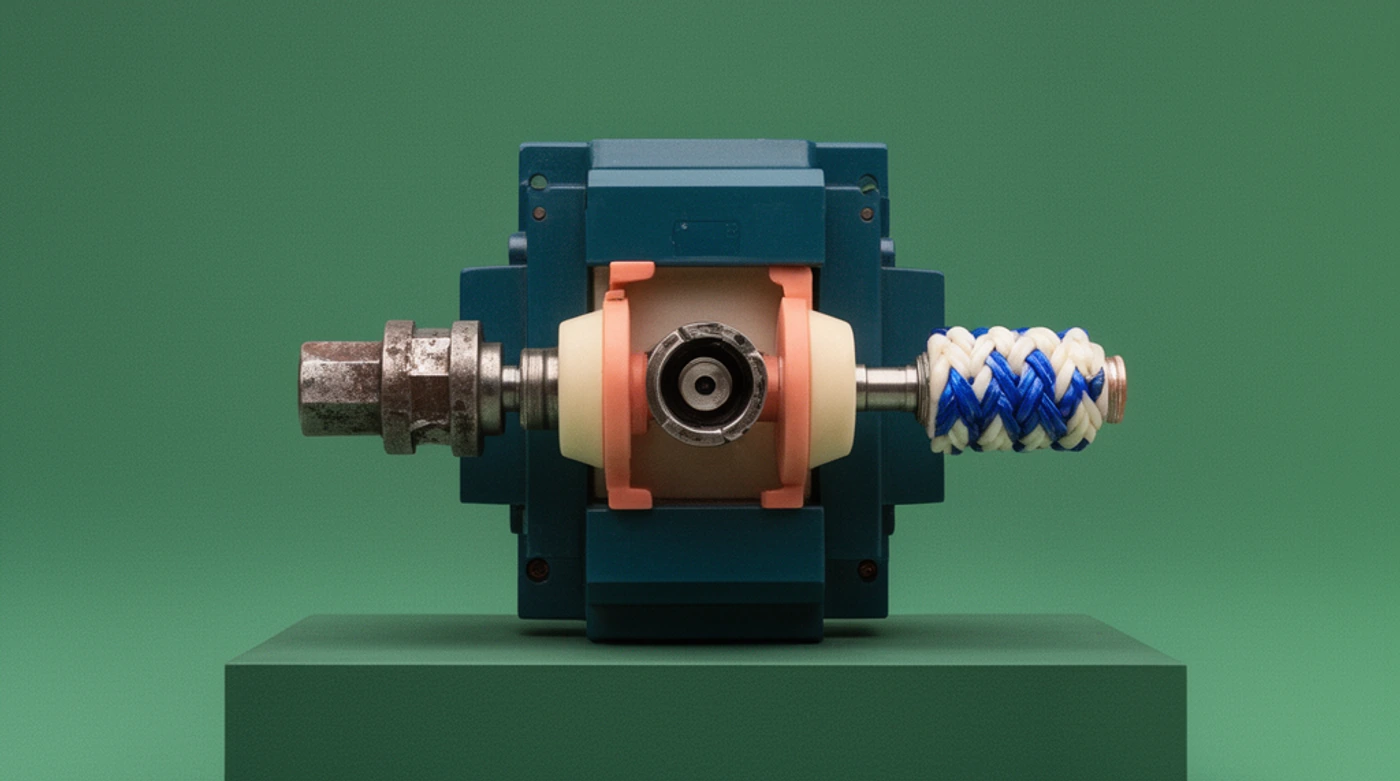
Agility is the ability to replace a component without rebuilding the machine around it.
The inventory is more valuable when machines can read it. A cryptographic bill of materials can connect a vulnerable primitive to packages, services, certificates, devices, data classes, vendors, and owners. That turns a new standard, library advisory, or policy deadline into a queryable impact assessment instead of another survey spreadsheet.
The same structure improves present-day security. Key rotation, ownership, dependency visibility, algorithm negotiation, and recovery are useful when a certificate authority changes, a library vulnerability appears, a vendor ends support, or an implementation flaw is found. PQC is a reason to build crypto agility, but quantum computing is not the only event that will use it.
Cryptography Is Infrastructure, Not a Feature
Cryptographic failures rarely begin with a mathematician proving the wrong theorem. They begin with a certificate nobody owns, a signature verifier burned into ROM, an archive whose wrapping keys cannot rotate, an appliance on unsupported firmware, a protocol that cannot negotiate a new suite, or a migration plan that discovers half the estate after the deadline.
The medical archive, industrial gateway, and public website all face the same uncertain quantum horizon. Their engineering obligations differ because their promises expire at different times and their replacement paths have different friction.
That is the durable posture: protect the promise, not the trend.
Do not evacuate the city. Do not ignore the load-bearing cable. Inventory it, model its remaining service life, qualify the replacement, stage the transition, keep recovery available, and retire the old assumption before it becomes the only part of the bridge you cannot change.
If the migration succeeds, the quantum future should arrive without a dramatic day of failure. The absence of drama will not mean the risk was invented. It will mean infrastructure engineering worked.